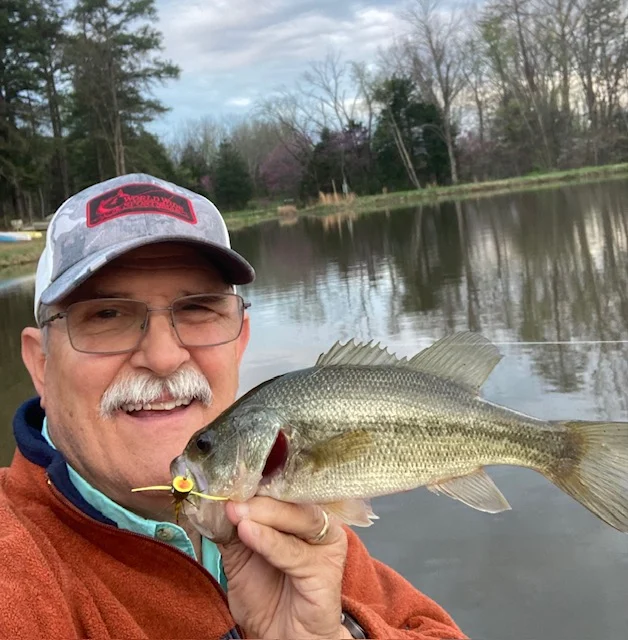
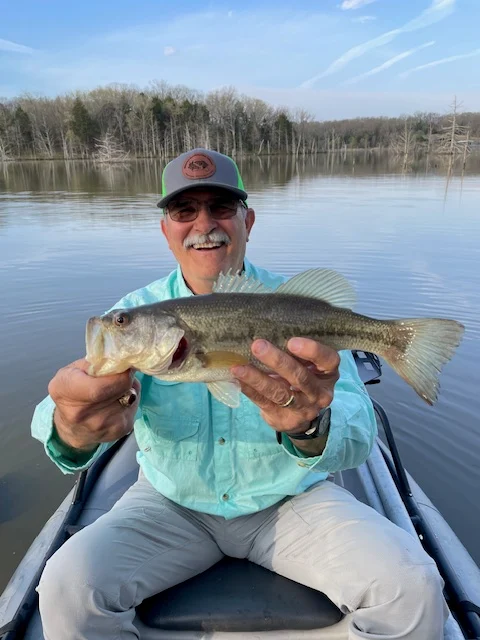
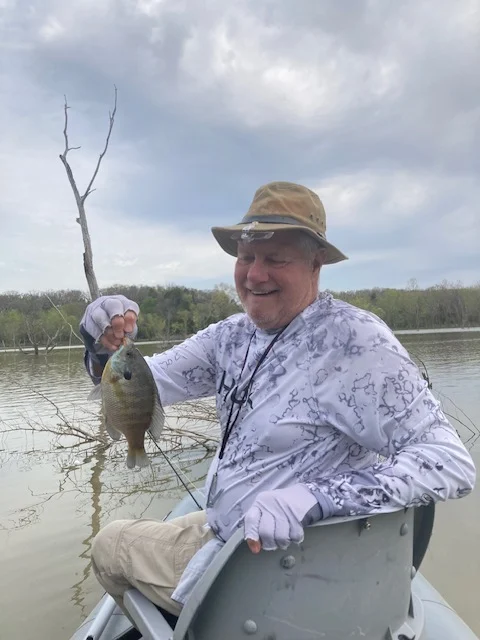
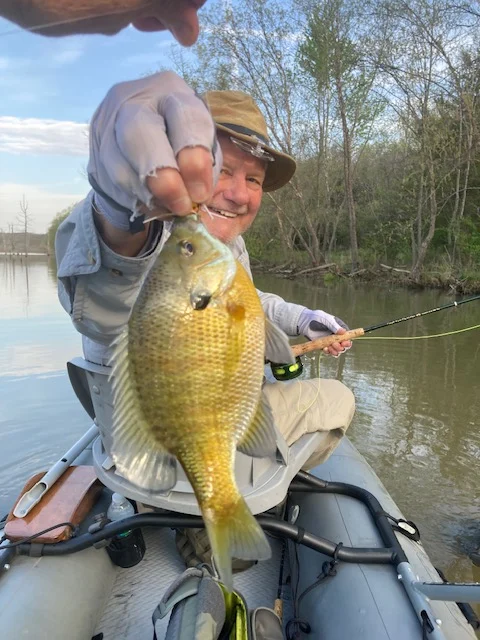
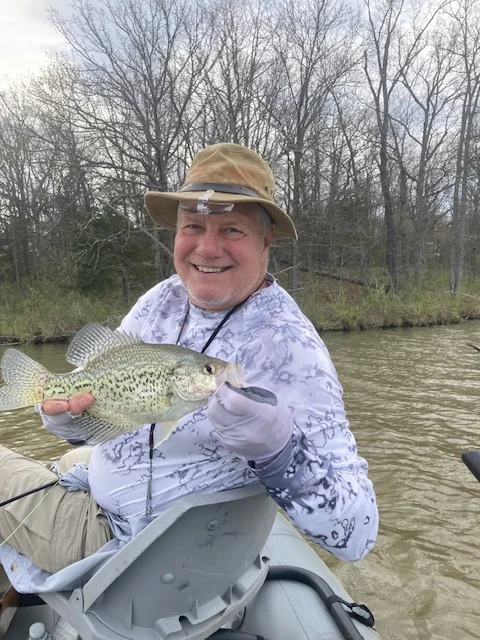
Generous spring rains plus warming temperatures made for some great warm water fly fishing on local lakes lately. I, Al Harper, visited a couple of reliable local bodies of water just before Easter and enjoyed action on moderate-sized poppers and jigs.
After flooding that occurred in a large portion of southern MO and northern AR, rivers and lakes filled quickly. But in only a few days they had receded again. Once the natural clarity of the water returned, bass, panfish and crappie came to life and started looking for food.
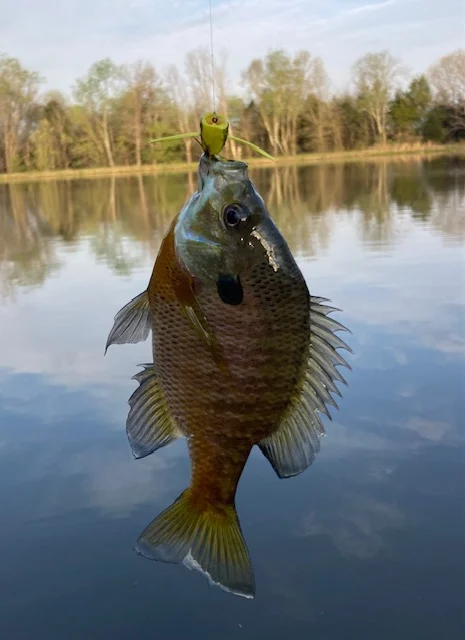
One small lake I fished will be inundated with Lillypads along two long shores by the middle of May but before that occurs, bass and panfish patrol the shallows in healthy numbers. And they seem to resent any top water intrusion by small bugs or frogs. A stealthy approach in a small watercraft and a fairly long cast was required, but then a couple of quick short “pops” followed by careful inactivity — sometimes for up to 10 seconds — was enough to result in a strong strike.
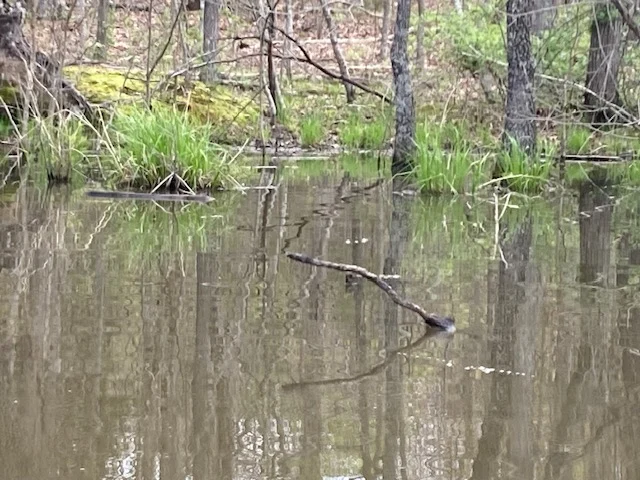
Working shorelines choked with the remnants of last year’s Lilly pad roots and fallen limbs and logs that provide the cover fish crave was challenging. This was partly because one had to be thinking about an “exit strategy” for delicately working a fish out of structure when a strike occurred. Panfish hit the popper just as hard as moderately sized bass and zigzagged crazily as they were worked back to the boat.
One recent warm water excursion yielded about 30 panfish and half a dozen bass. Most hit poppers but a few struck a Marabou jig dragged steadily along under an indicator as well. That was a satisfying result considering the fish will soon have a much safer haven under the thick “water canopy” of surface vegetation that is almost impenetrable with even weedless flys.
On another effort just a few days later, I was joined by Dan “the Man” Stag (Staggenborg) just back from a cruise to New Zealand and Australia. We capitalized on the magic first hours after daylight on a 55-acre MDC lake in Franklin County on Good Friday. Within minutes of launching a Flycraft inflatable drift boat we were getting strikes along a shoreline. But the strikes proved difficult to convert to hooksets at least initially.
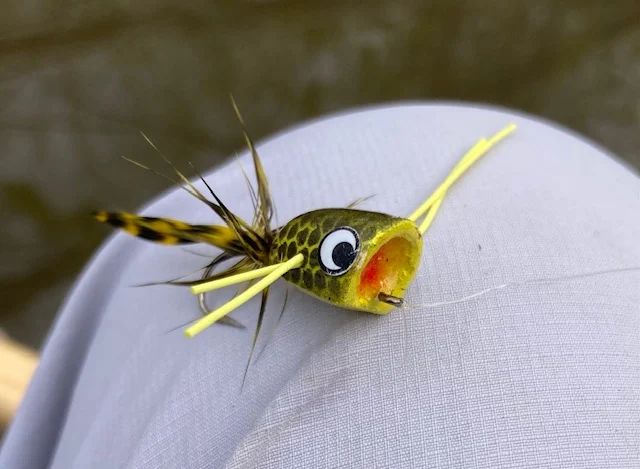
Keeping a very tight line was of the upmost importance, not only for generating subtle pops with a snub-nosed fly but in being ready for a quick hookset as well. The fish we caught wouldn’t wait for us to silently repeat the proverbial phrase “God Bless America” before we set the hook. Perhaps it was because of their skittish nature so early in the season, but they were lighting quick to spit the fly once it was in their mouths.
The size of the popper was crucial as well because it had to be small enough to fit in the mouth of the panfish but substantial enough to handle bass of up to about 16” in some cases. We had to deal with some wind during the day, but when we could find shelter from it along shorelines, tossing the fly alongside logs or close to the shore and enjoying the anticipation of many strong strikes was really fun.
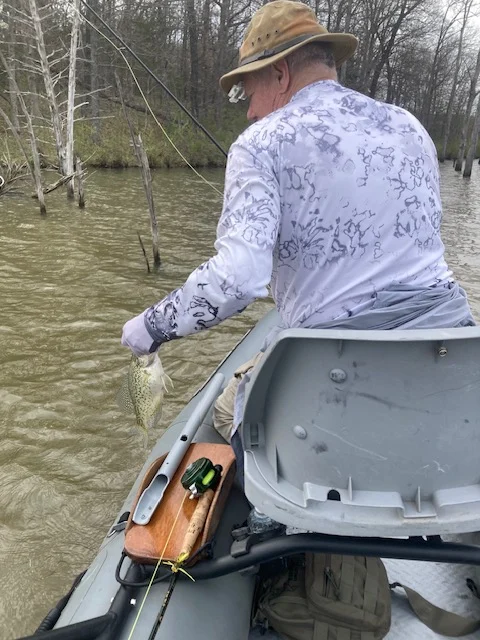
Most of the fish we caught were in 2 to 3’ of water. When the daylight intensified as the morning wore on, getting surface strikes became more difficult so we switched to jigs under indicators and continued to catch fish at a pretty good clip. At one point, Dan caught a nice crappie that took a few seconds to carefully look over his fly before trying to take it violently to the bottom.
Maybe because more fisherman took off for Good Friday, there were several of them there later in the day. We noticed that few seemed to be having much luck however. I could be wrong, but I speculate this was because most of them got a late start and used larger and more cumbersome spinning rod baits that might well have spooked fish that were just tentatively starting their early spring feeding.