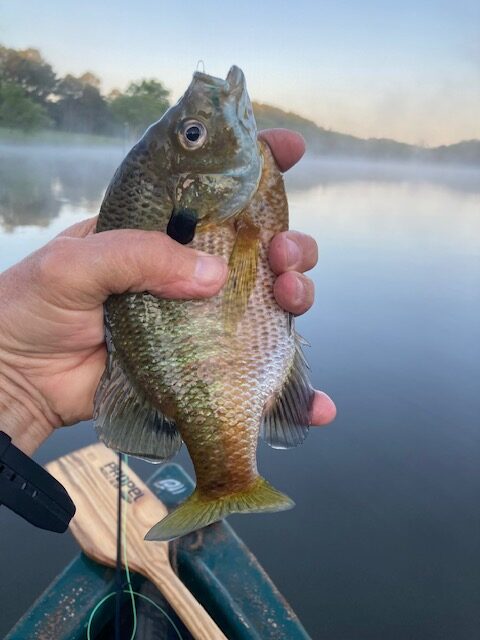
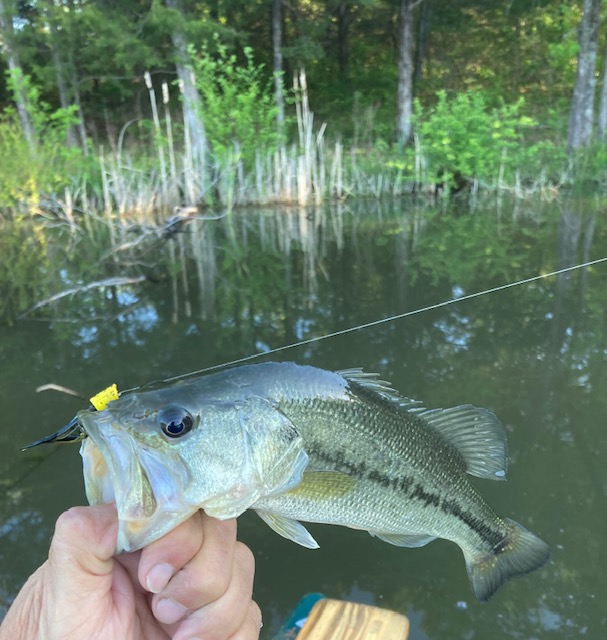
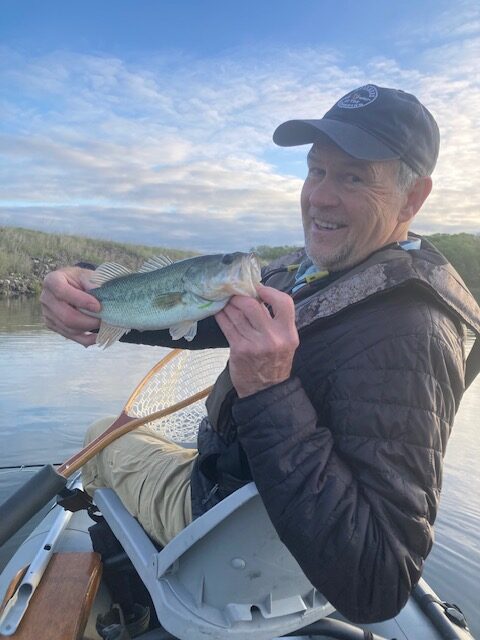
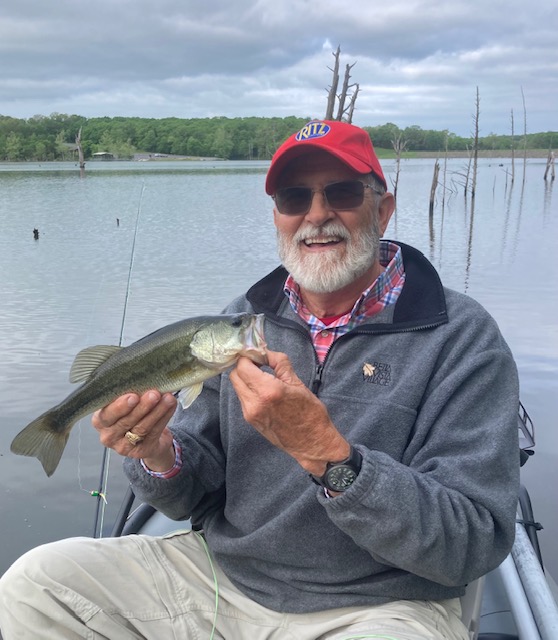
I, Al Harper, and a few friends have been enjoying great fly fishing on warm water lakes in mid to late April. Largemouth bass and sunfish move into the same shallow aquatic territory this time of year and both species become voracious and territorial as the days warm up. They are particularly eager to strike small bugs that find themselves suddenly in the water and struggle to get to the nearest log or to the bank.
Exploiting this opportunity with a flyrod and a popper takes me back to the origins of my love of flyfishing and provides small adrenaline hits dozens of times on each successful excursion. For instance, an eleven-acre public lake in my town was heavily stocked by the Missouri Department of Conservation (MDC) at the tail end of winter and now panfish and bass within casting distance of the bank are eagerly striking dry flys. Port Hudson, a 55-acre MDC lake near Gerald, MO, has a healthy population of aggressive panfish and largemouth bass under the 18” slotted “keeper” size that are great fighters and easy to locate with a small water craft. In fact, almost every pond or lake in the Midwest has lots of warm water fish waiting to strike a fly.
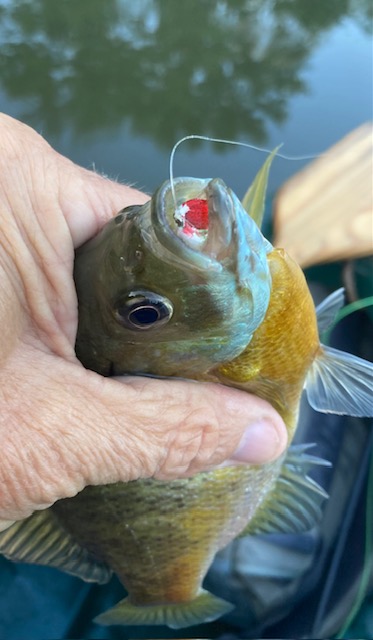
I’ve found that an intermediate sized popper gets strikes from bluegills that can weigh up to a pound and are sometimes 12” long and from largemouth bass as well. If a popper is small, the panfish ingest it and forceps are needed to extract it from their small mouths. But those same fish will usually strike a slightly larger fly and, if an angler is quick enough, he can still get a hookset on this fighter’s boney lips. They often strike more than once in an effort to dissect the insect. And largemouth bass are so naturally aggressive they often hit poppers of various sizes as long as it exhibits the right movement.
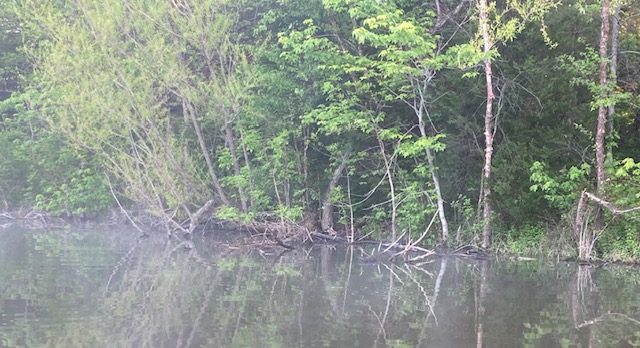
Of course, these warm water fish will feed on subsurface food like worms, mosquito larvae, fish eggs and smaller fish as well, but they like to be where there is lots of aquatic vegetation which can inhibit a subsurface fly. So the game becomes one of quietly sneaking up on likely spots and enticing a fish out of secure cover and to the surface with subtle popper animation. It’s a focused, concentrated effort similar to hunting small game. Too much noise on the approach or an unnatural fly animation and the fish flee or remain hidden. It’s also a real test of casting skill to land a fly just close enough to a likely log or stump situated near a tangle of tree limbs overhanging a dense bank.
Larger bass patrolling these shallows will feed on smaller panfish, but even big bass are dissuaded from feeding on the frisbee-like shaped adult sunfish with spiny dorsal fins. I once witnessed a bass rolling over and over in an effort to either continue to swallow or to expectorate a bluegill that was too large. Herons, egrets and birds of prey patrol the banks too and take a toll on fish and unsuspecting small snakes and frogs. It’s a viscous, dangerous free-for-all for fish, insects and amphibians alike this time of year in a warm water environment. When conditions are right, and the temperatures start to climb, it’s not at all unusual to land 30 sunfish and 20 bass in the two or three hours after dawn until the wind gets up.
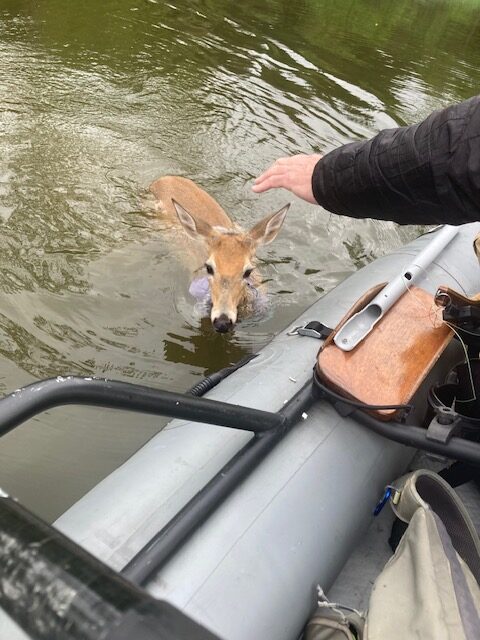
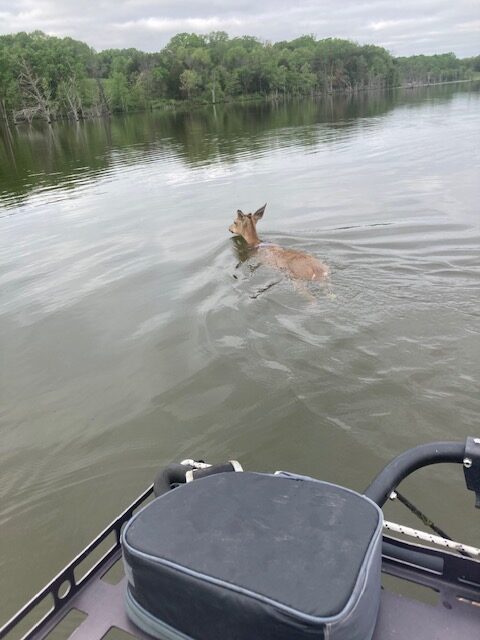
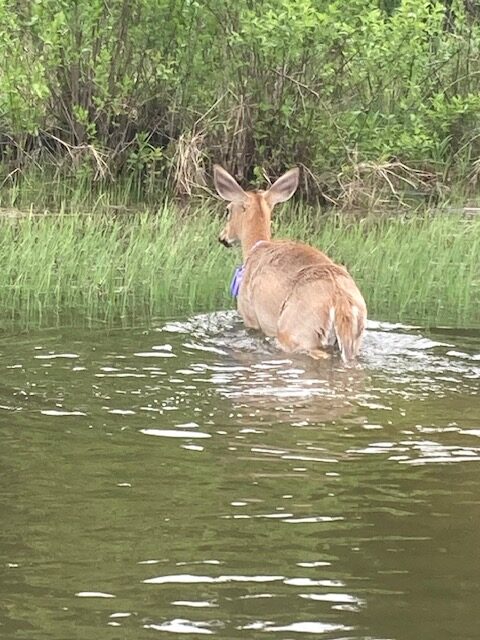
On a recent trip to Port Hudson, a young deer — apparently one that had been fed and was very comfortable around people — swam out to our boat a few times and escorted us along the bank for some distance.
I’ve often taken FATC buddies out in an inflatable drift boat that allows us to get in hard-to-reach shallow places that cumbersome bass boats can’t reach without spooking the fish. Very early mornings and late, still afternoons have worked out best. And after a spring rain the fish have been particularly active. But whether it’s a nimble panfish or goggle eye or a quick, strong bass it’s the thrill of having a surface strike erupt in the still water that keeps me casting poppers in springtime.