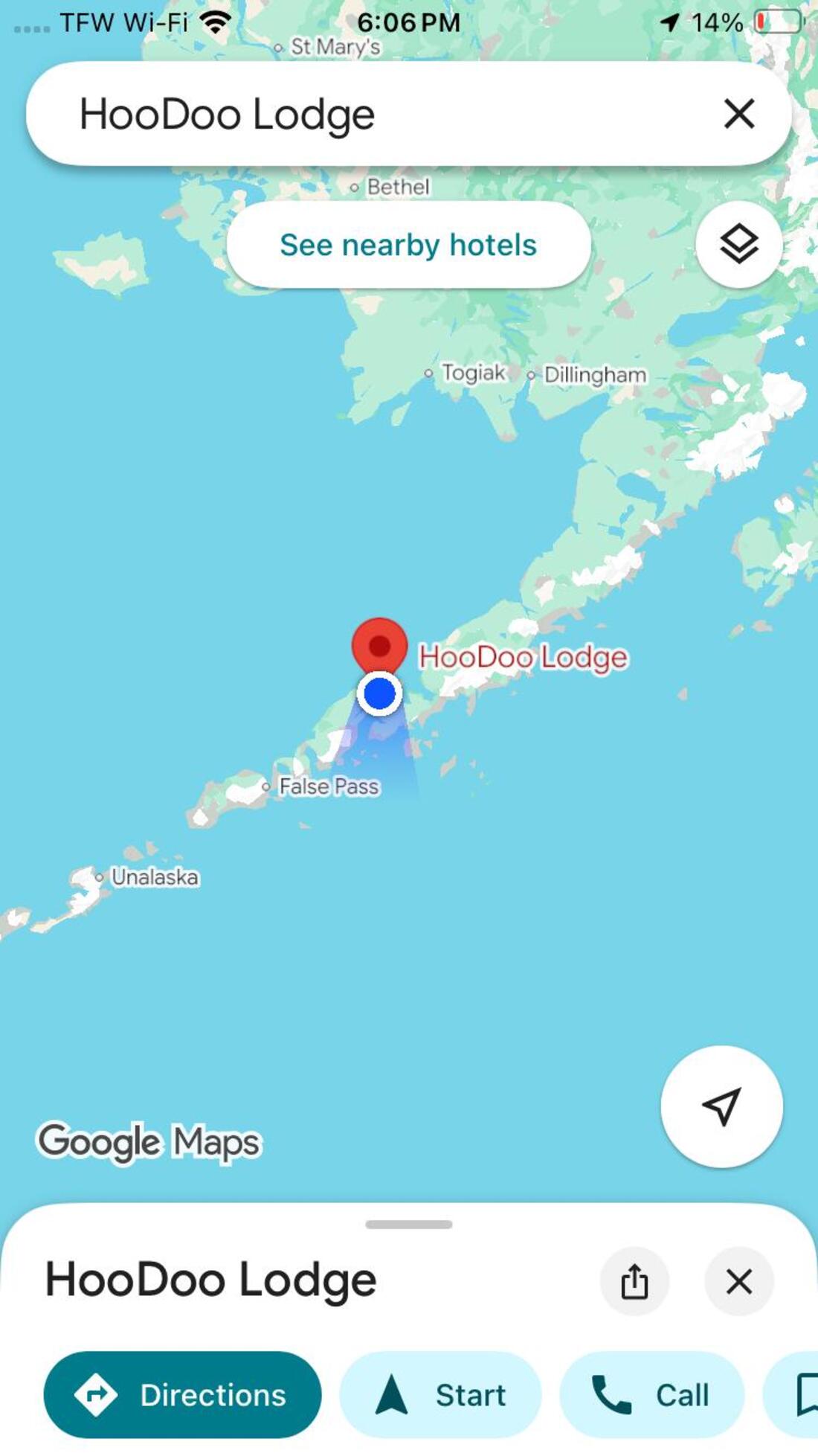
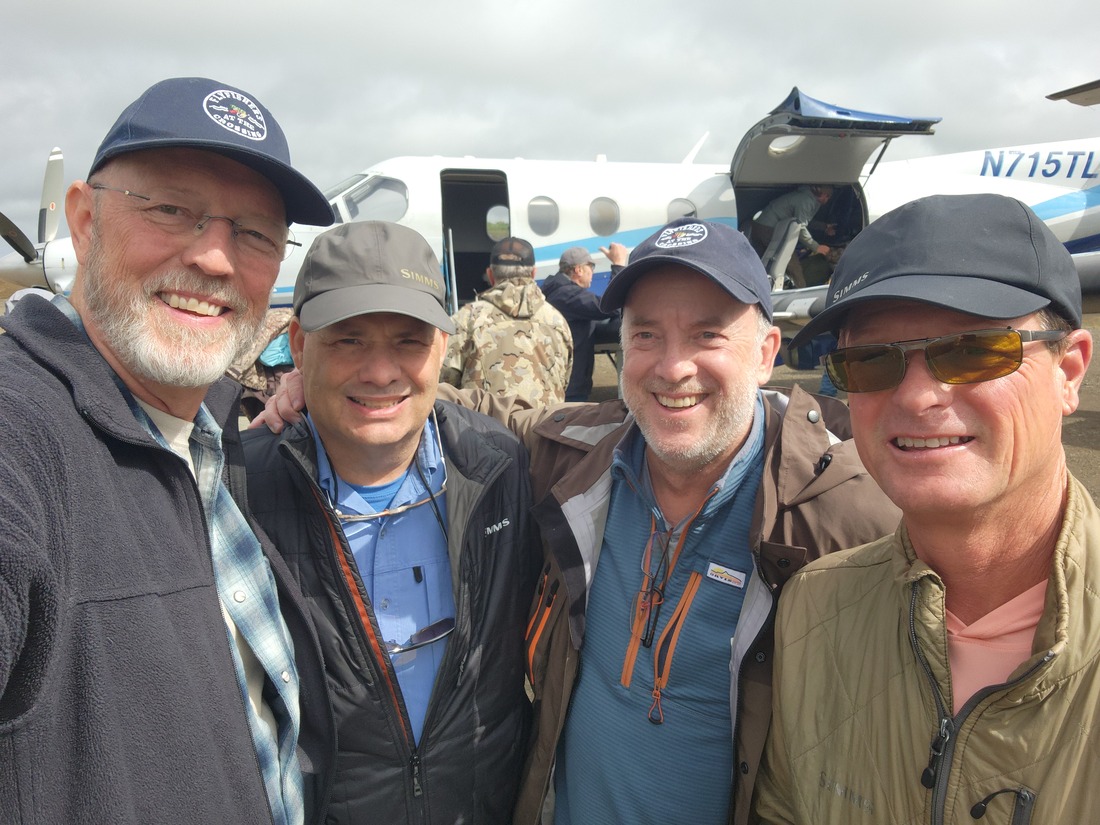
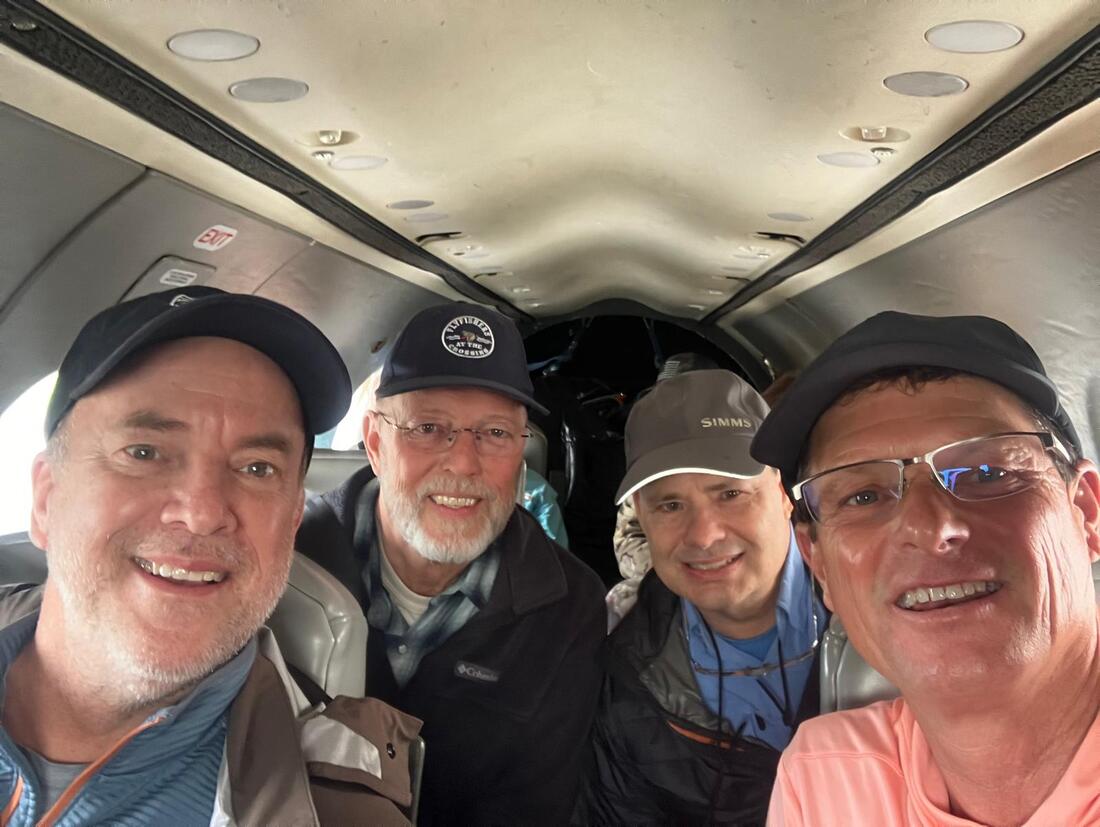
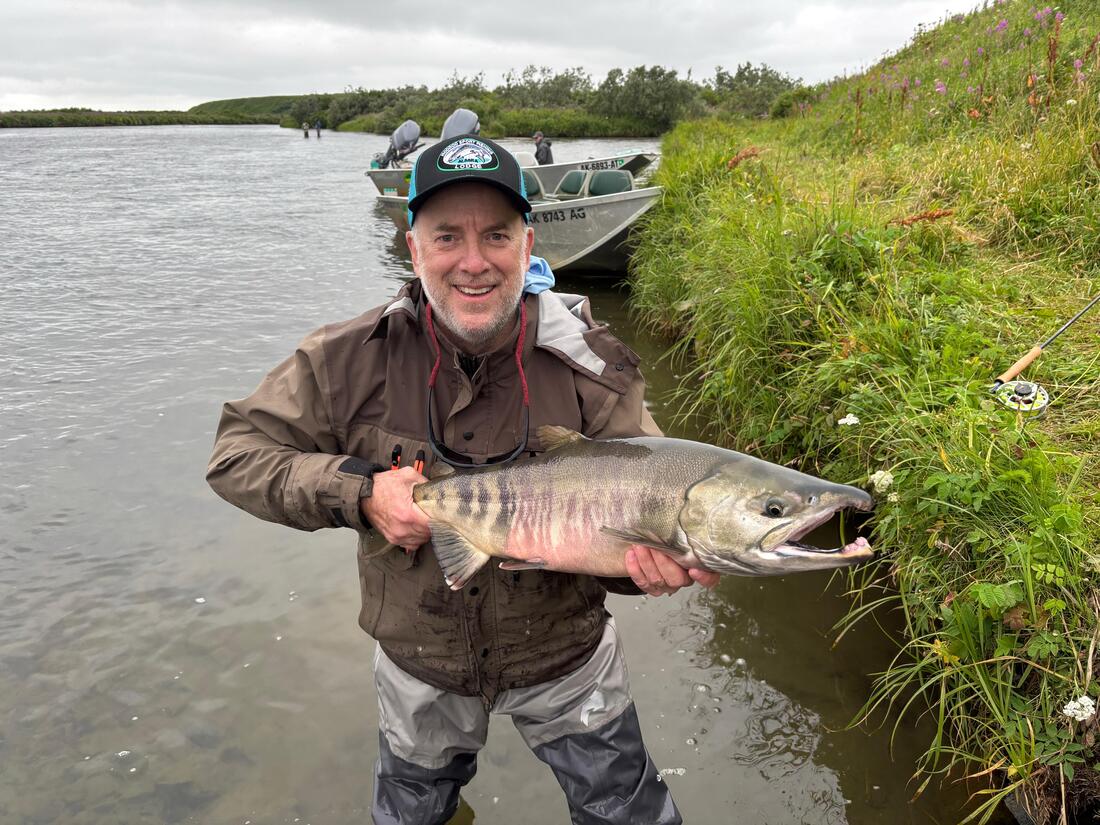
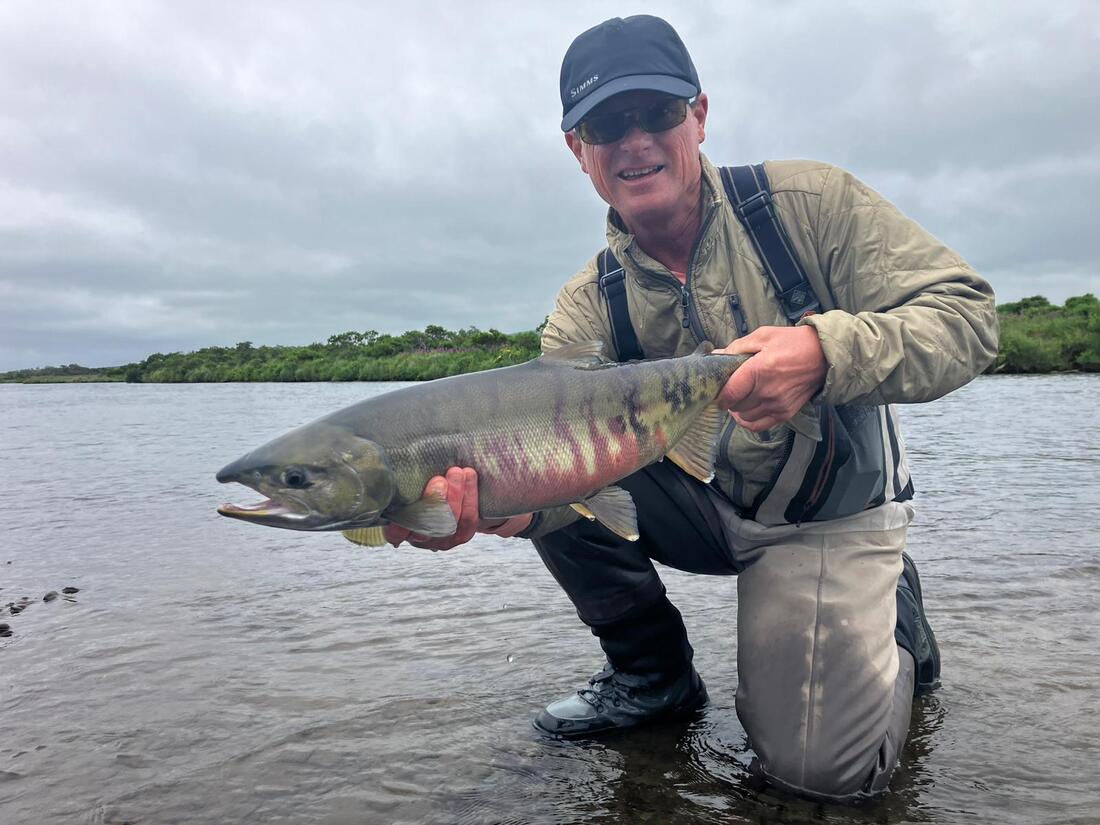
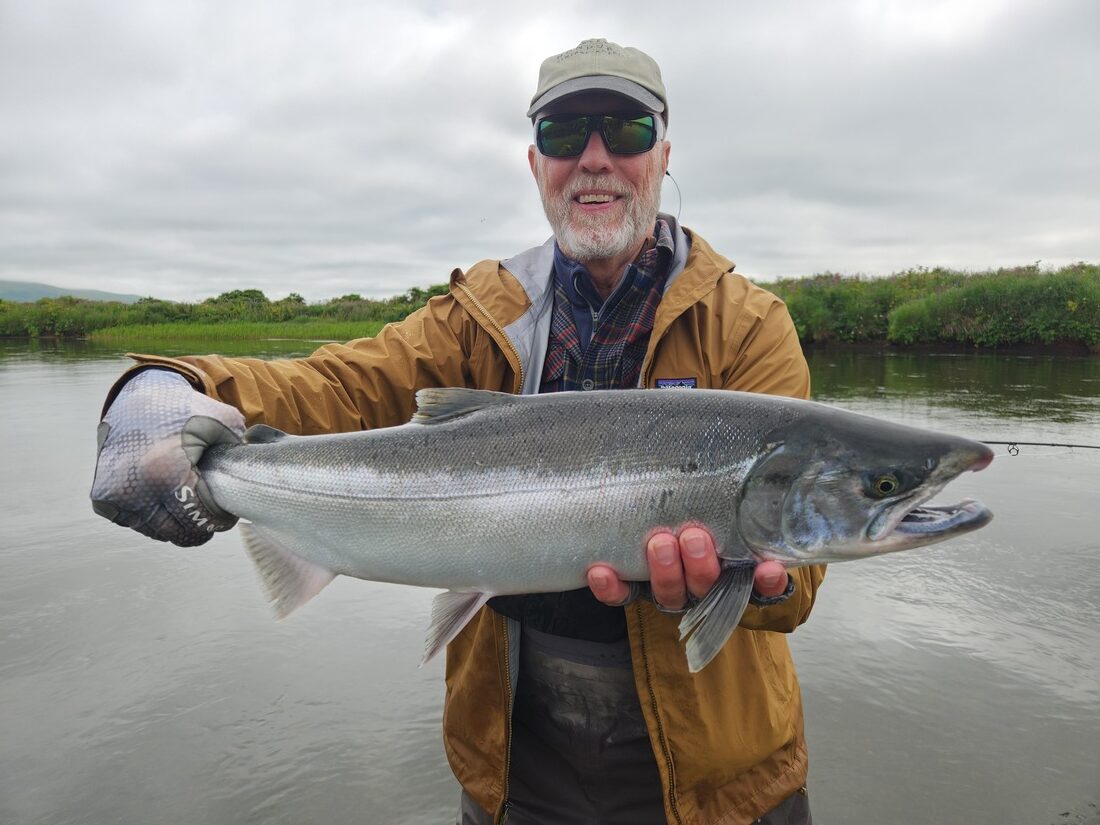
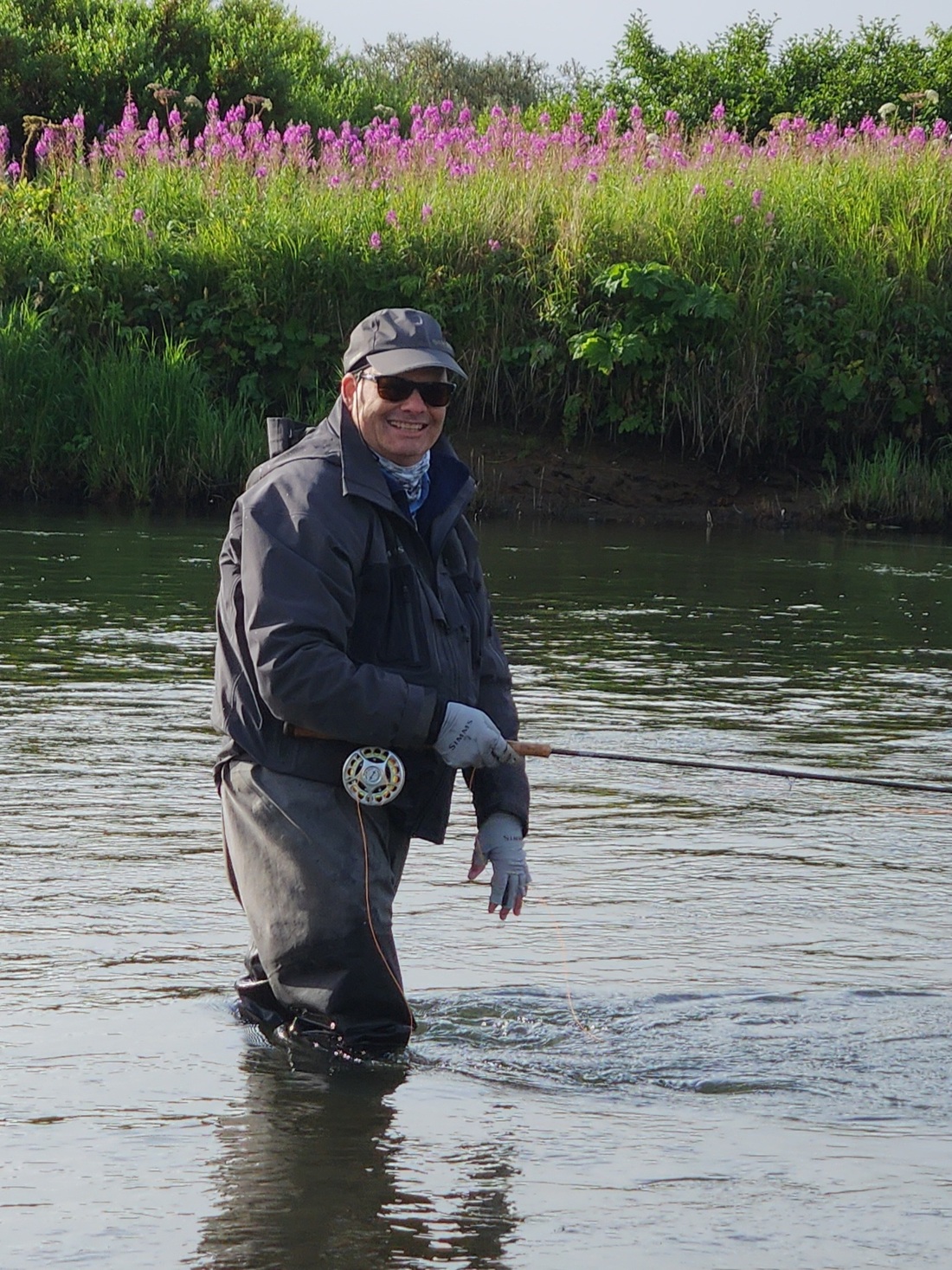
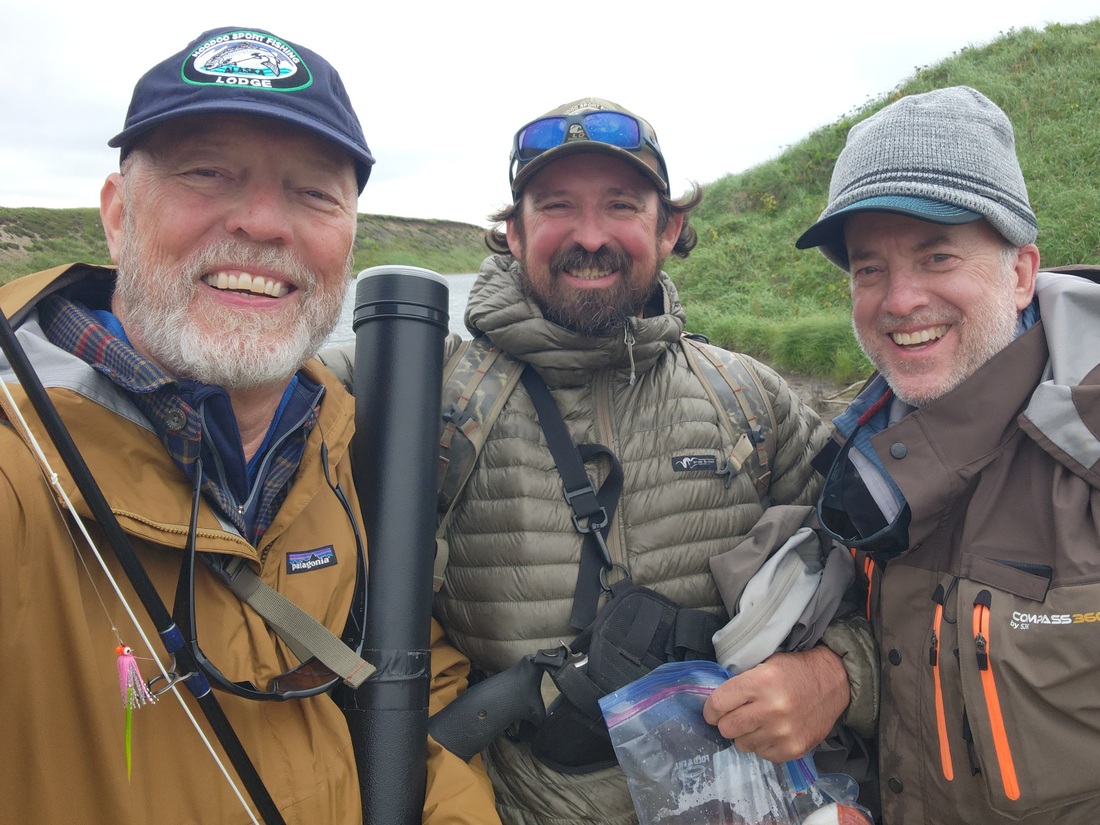
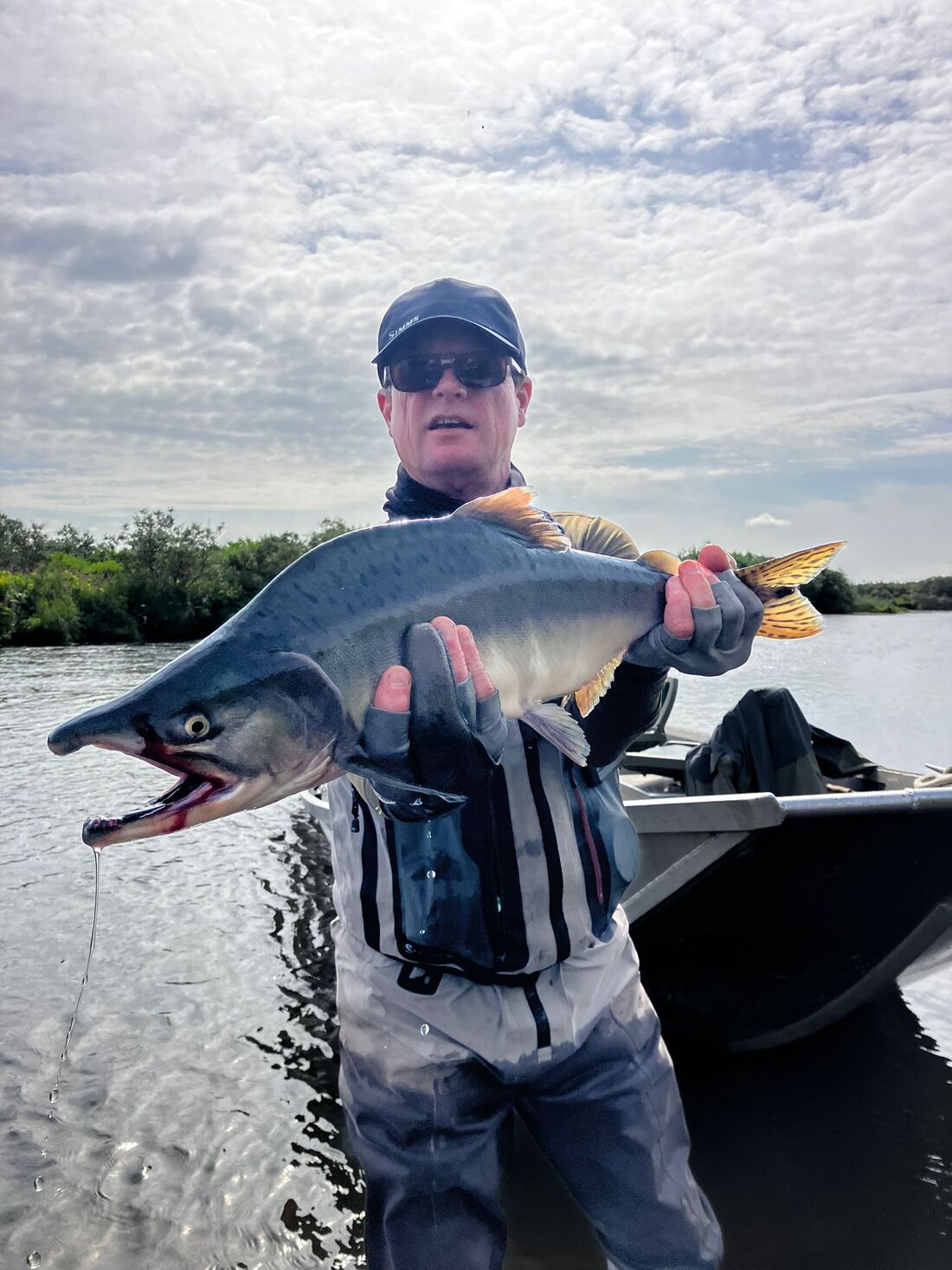
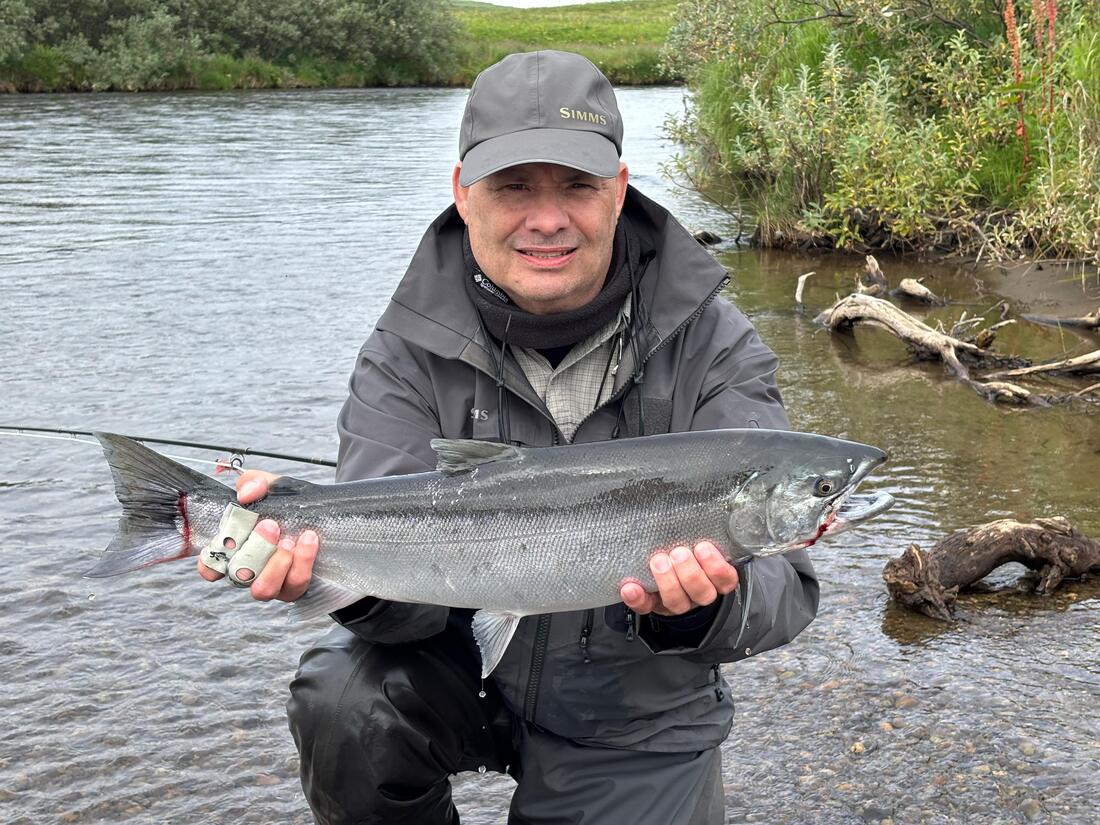
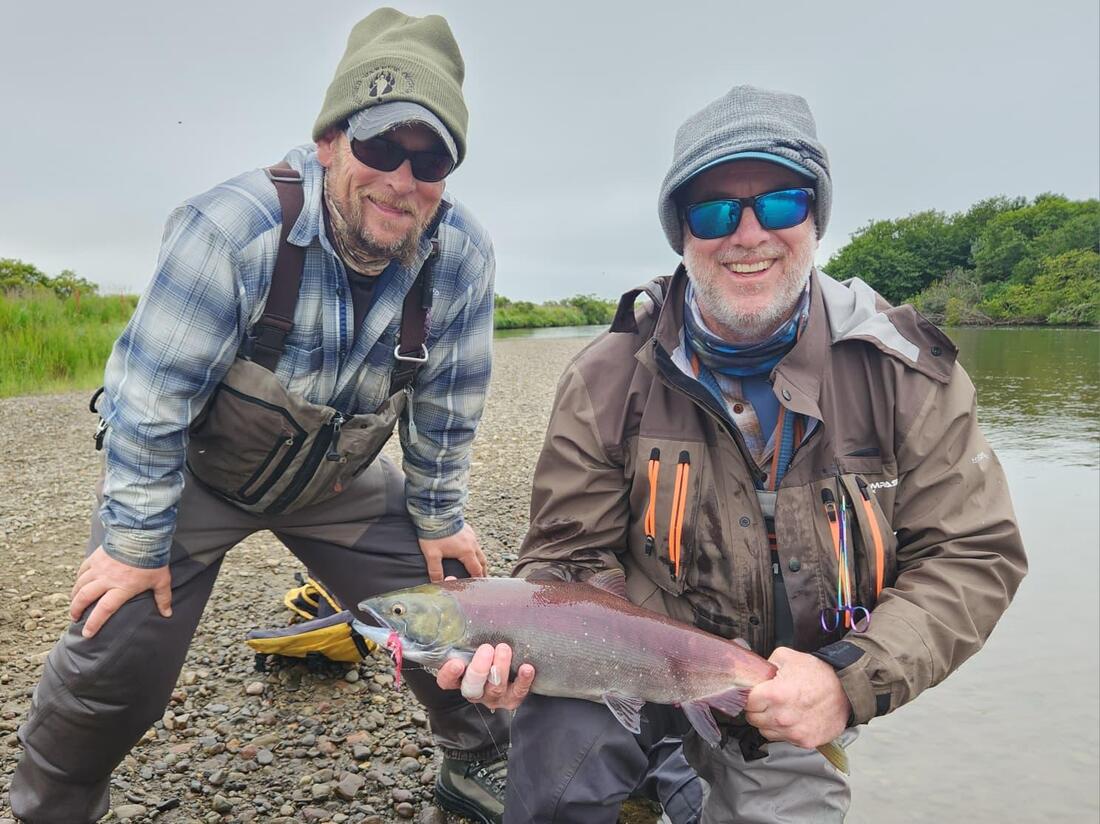
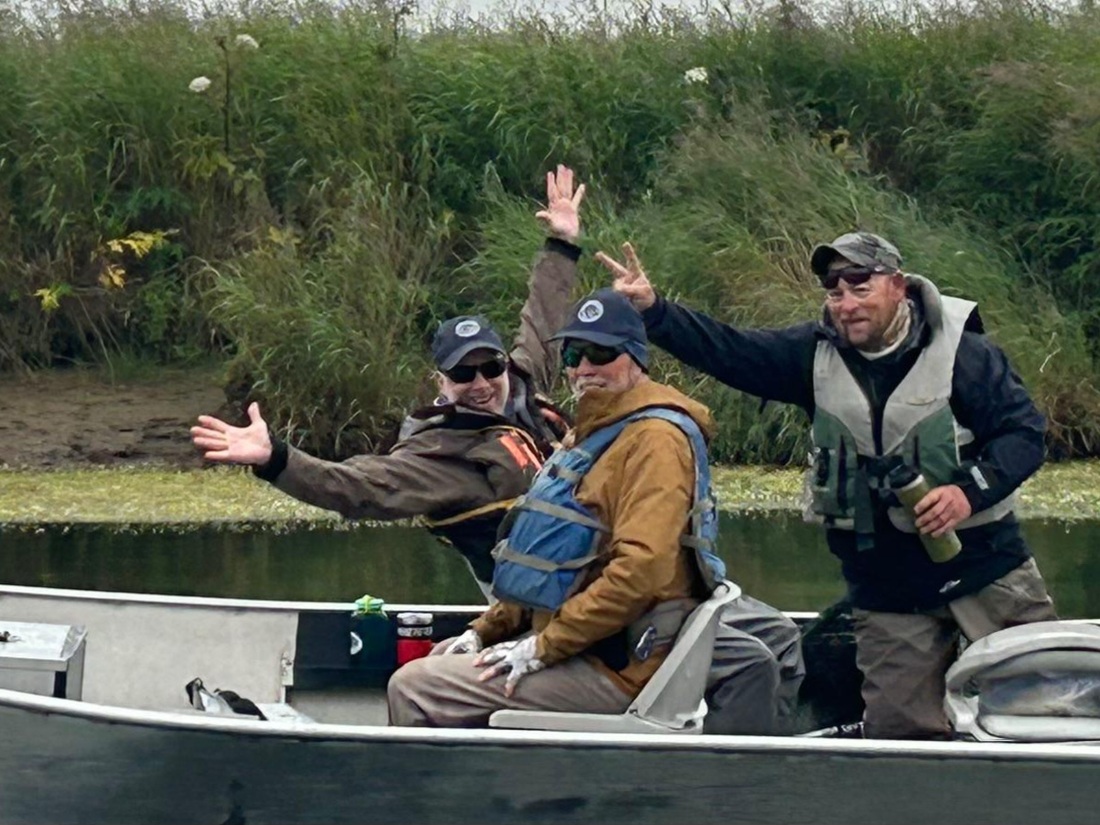
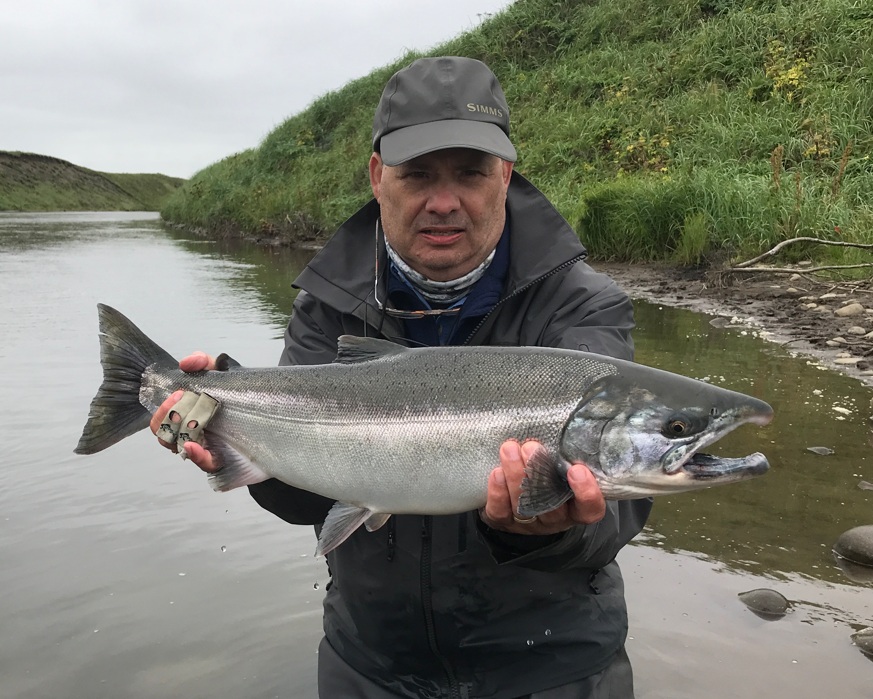
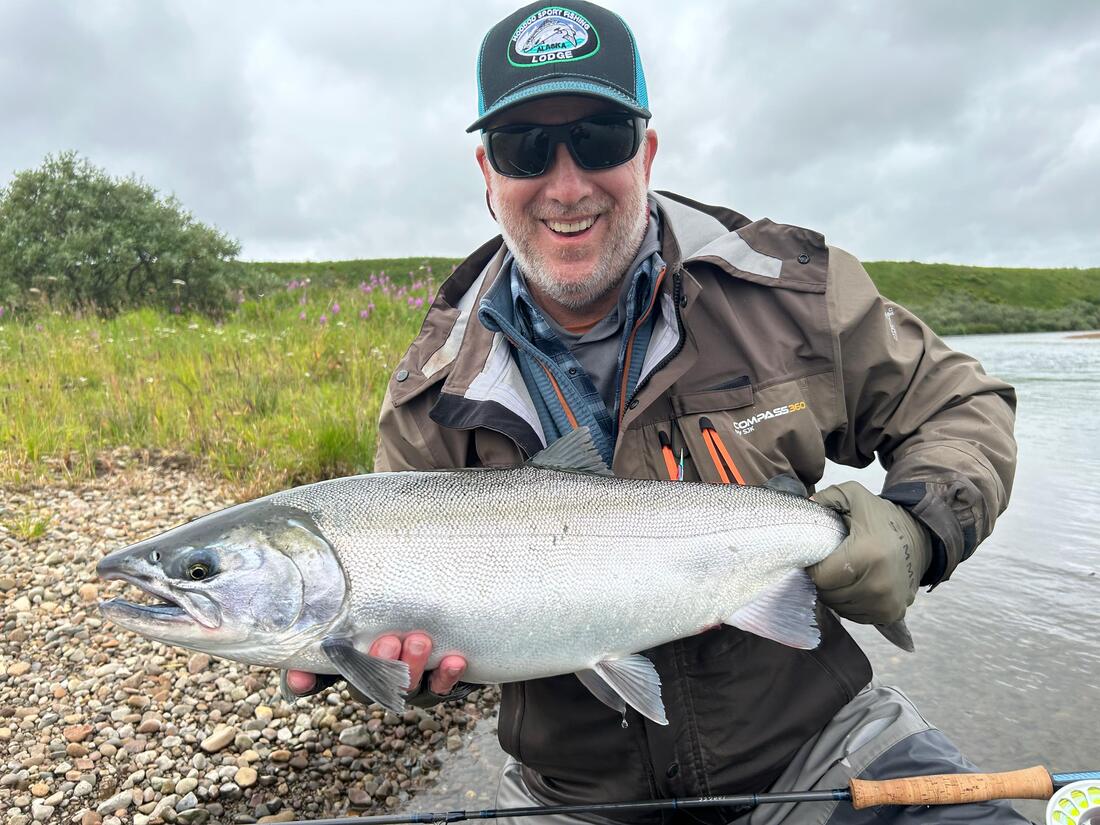
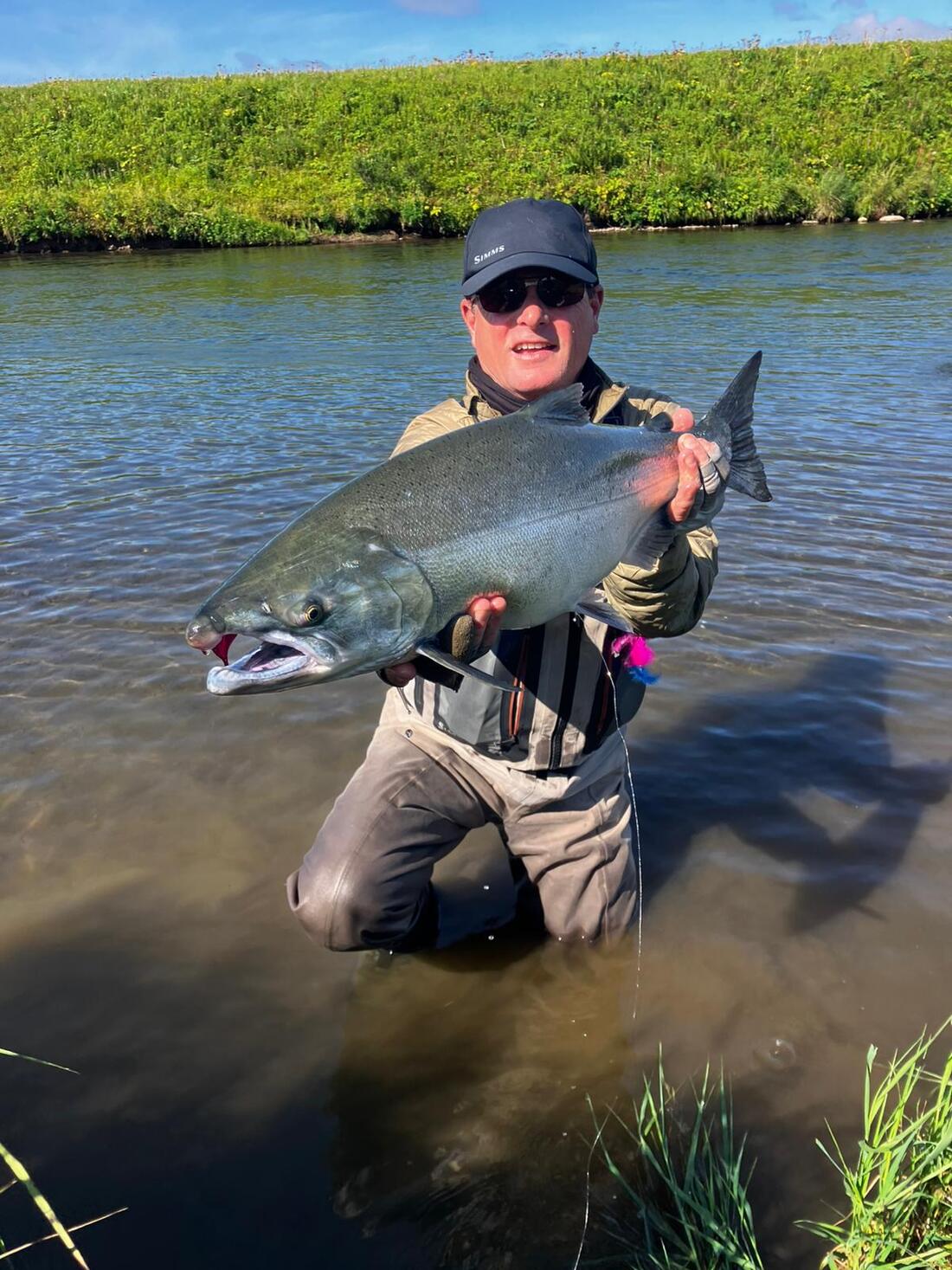
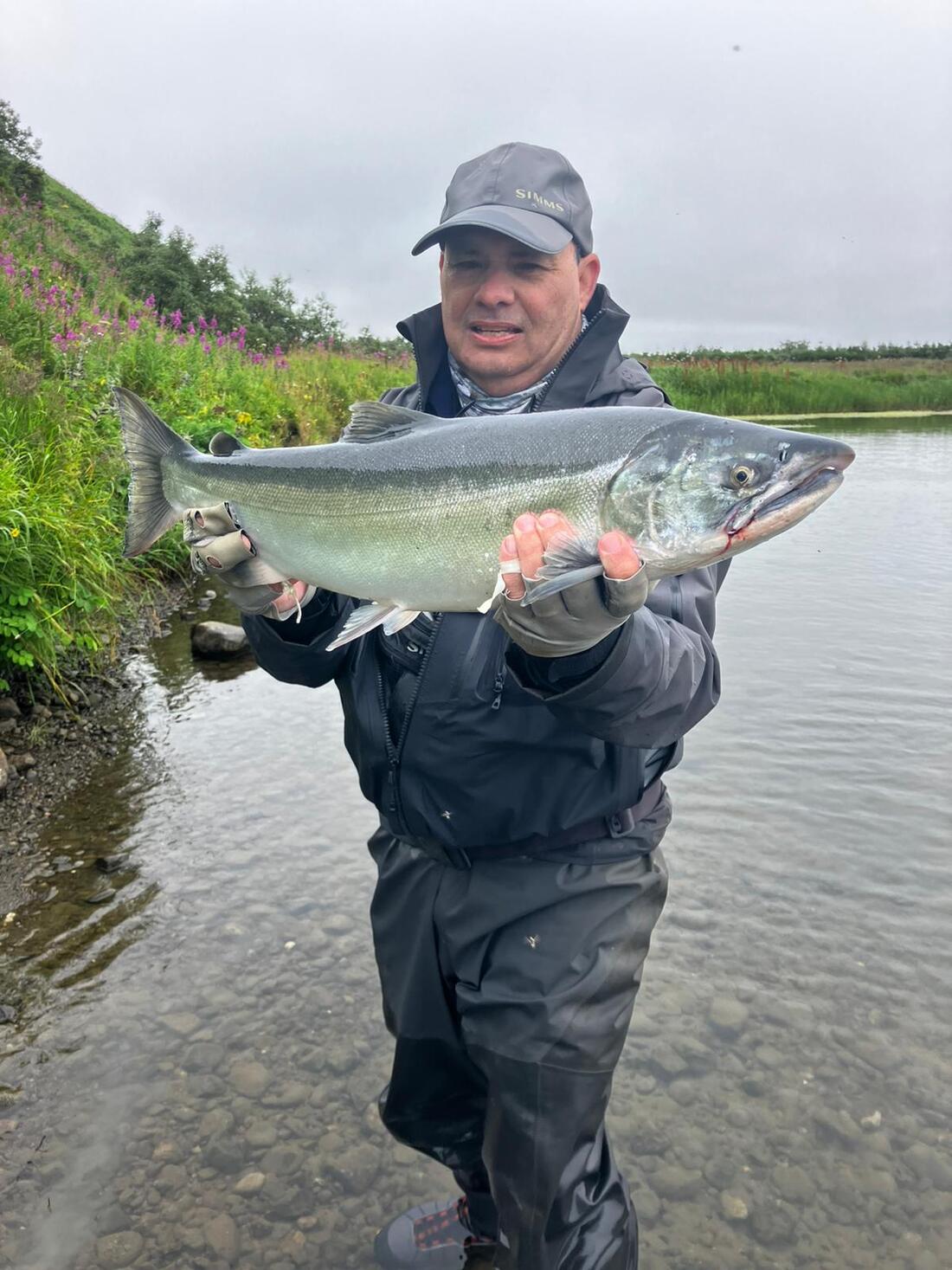
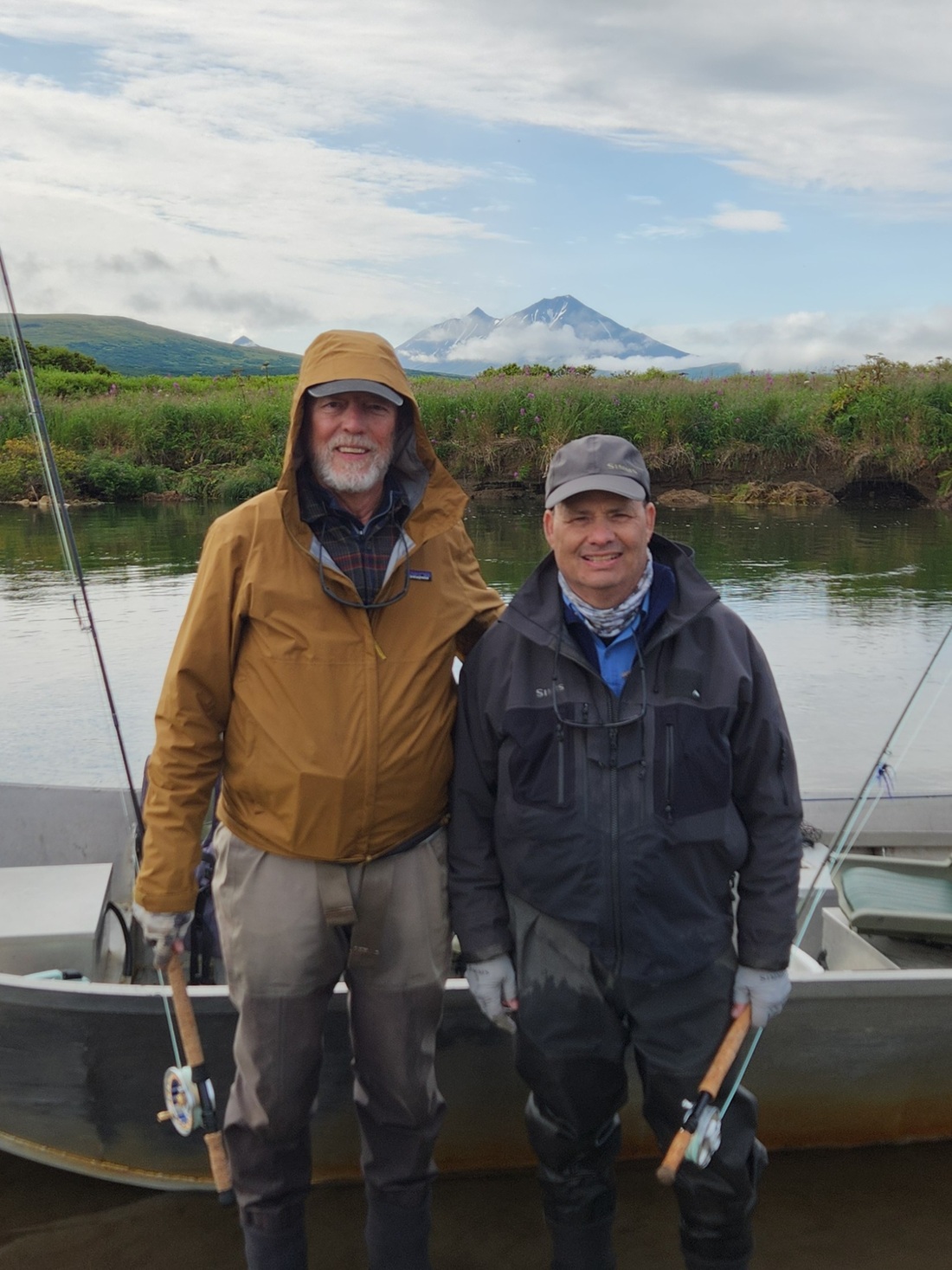
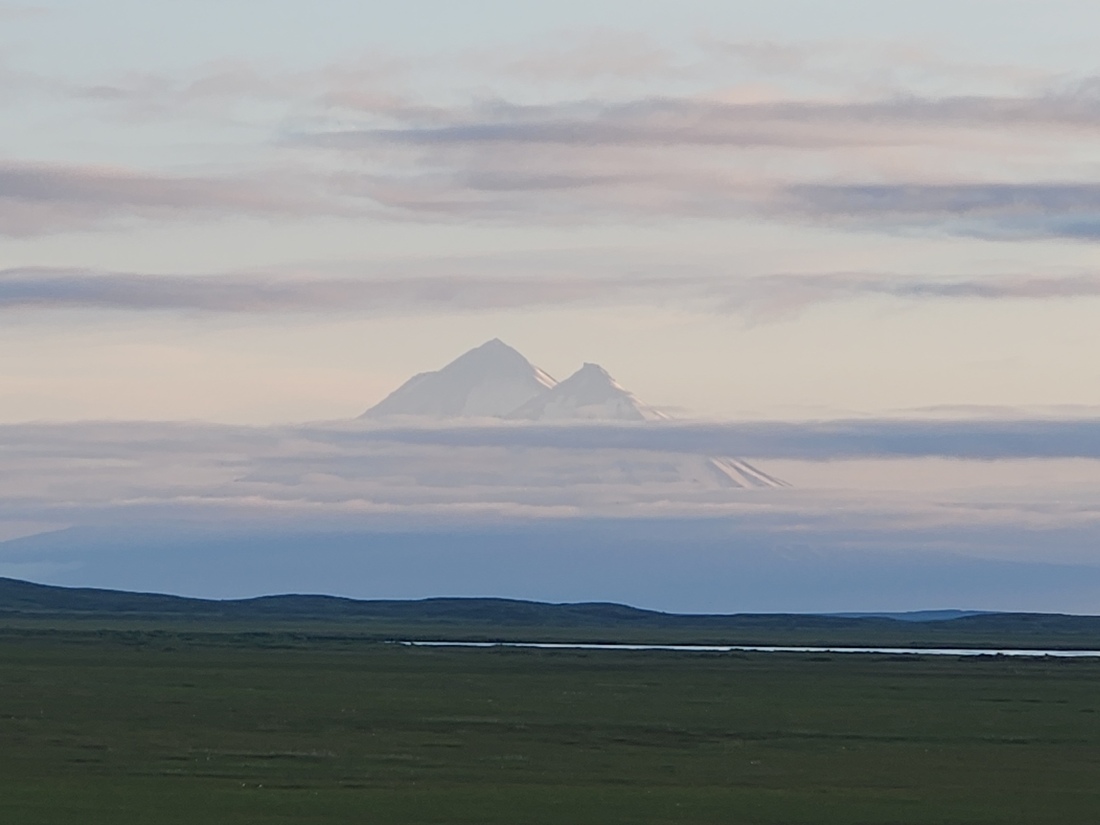
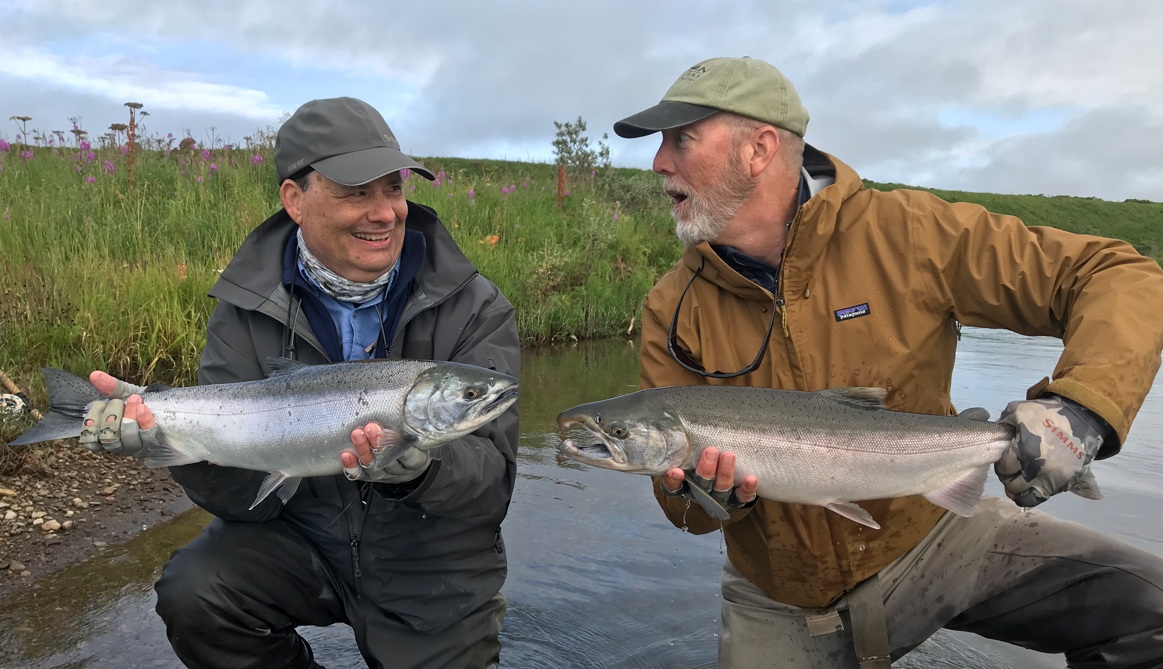
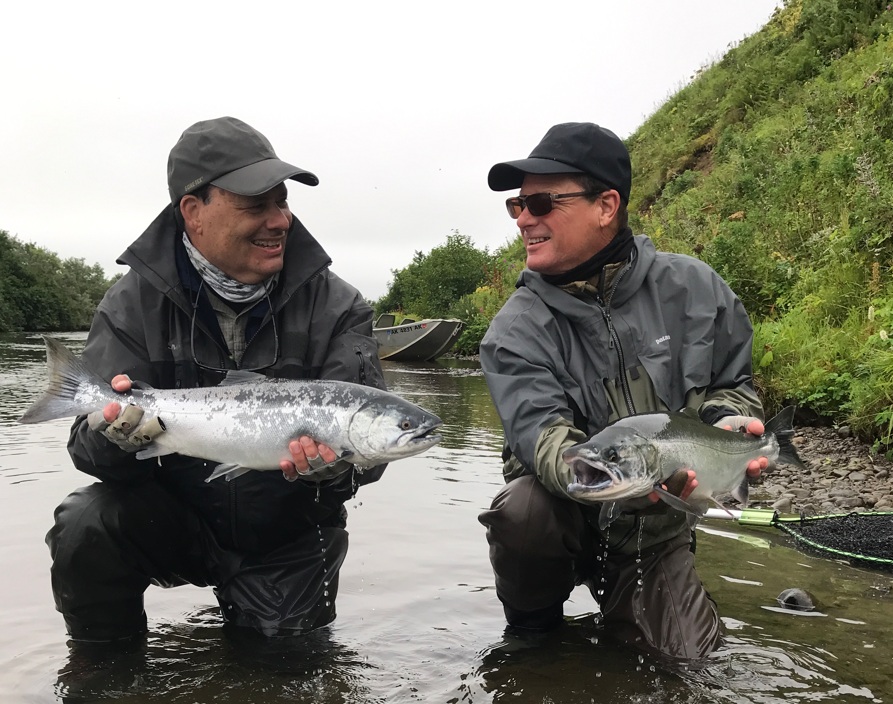
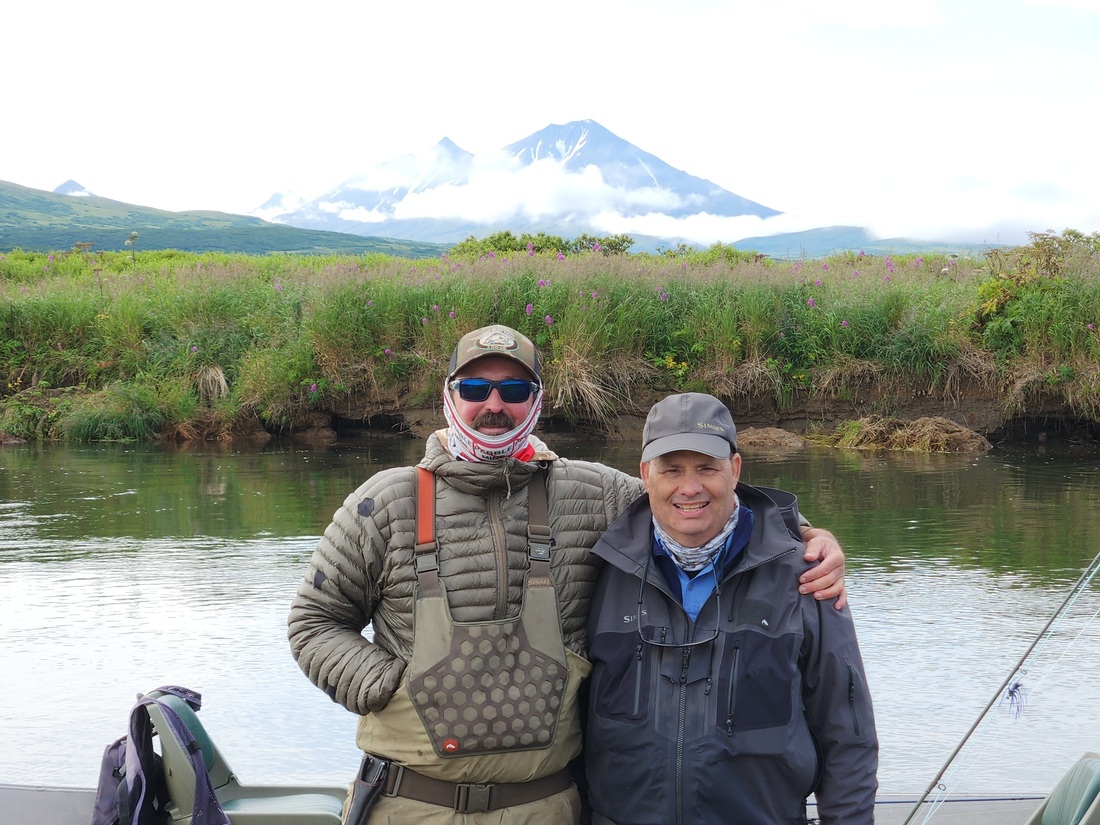
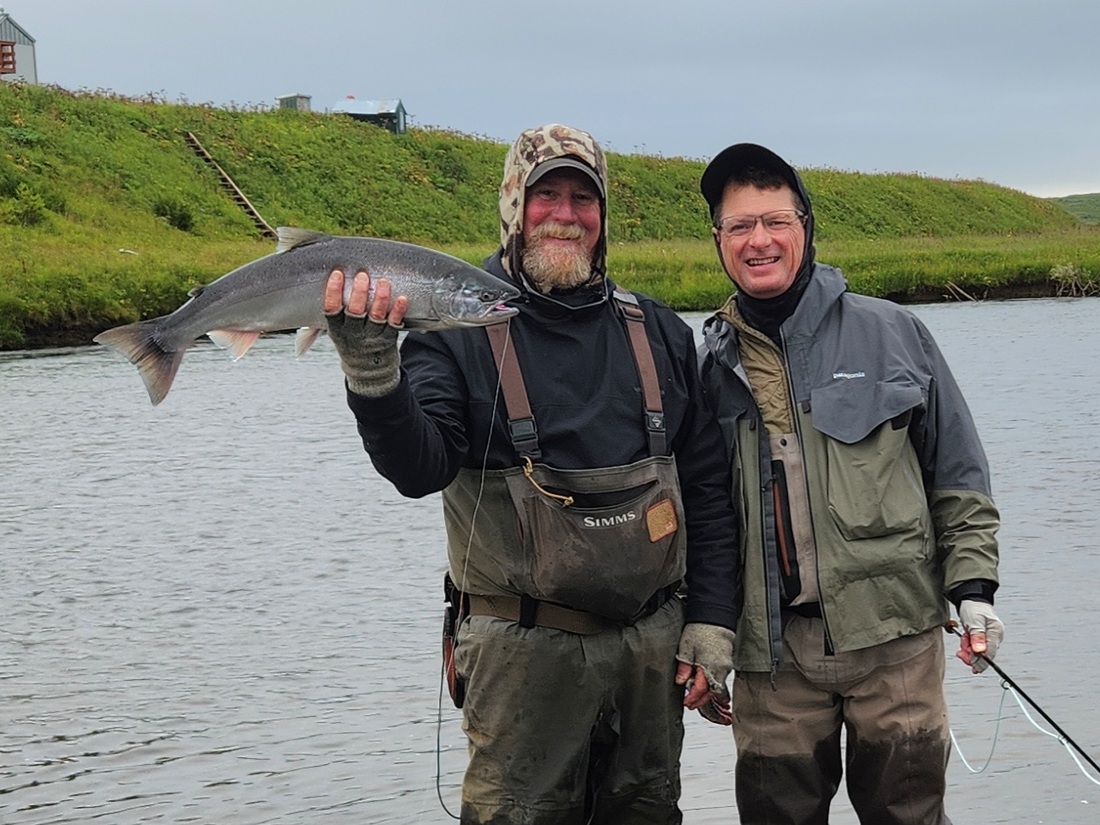
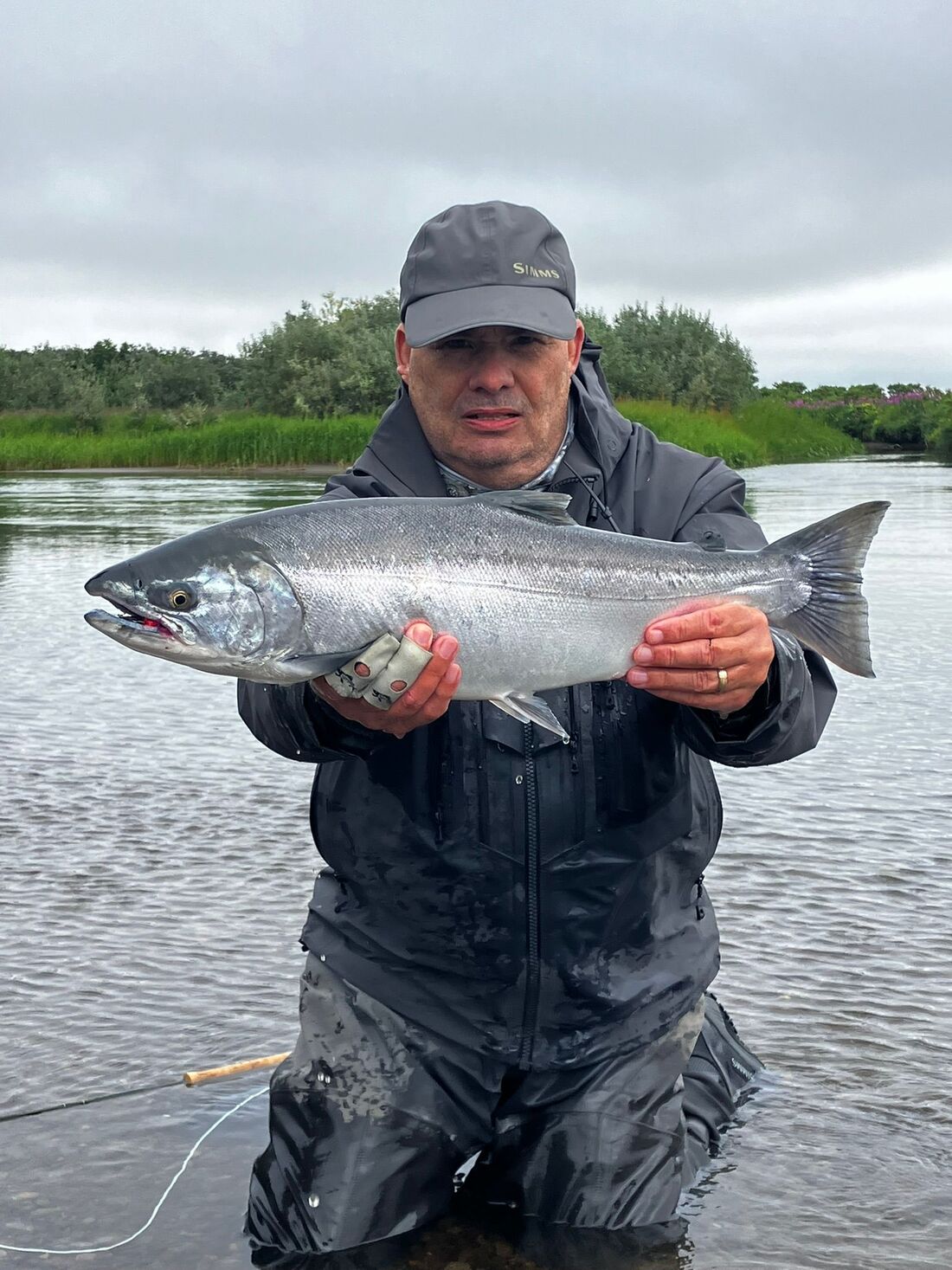
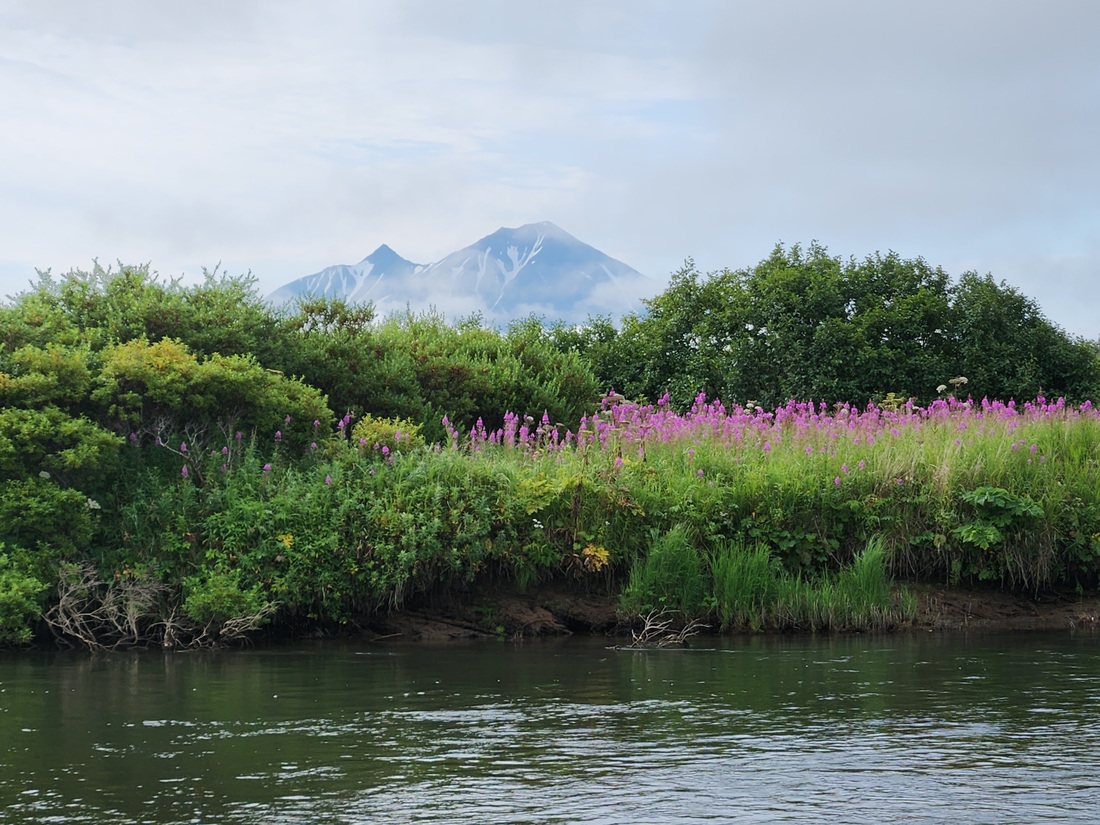
In August 2025, four FATC brothers—Matt McClure, Jim Craig, Sterling Short, and I, Brian Ellis—embarked on a long journey to the Last Frontier: Alaska, in pursuit of the legendary silver salmon. The seeds of this adventure were planted in February 2024, over lunch with Matt McClure after a casting session. He was curious about my past fishing experiences in Alaska, as he was beginning to plan a trip of his own. I shared that I’d been researching lodges specializing in silver salmon, and one name kept rising to the top—Hoodoo Lodge. Tucked away in a remote stretch halfway down the Aleutian Peninsula, it offered the kind of rugged, off-the-grid experience we were looking for. It didn’t take long before it became our chosen destination.
Alaska’s vastness is both awe-inspiring and overwhelming, especially when trying to choose a single fishing destination. For many first-time fly fishers, the temptation is to chase it all—every species of Pacific salmon, along with rainbow trout, Arctic char, and grayling. I’ve explored enough of those waters to know where my heart lies: with the silver salmon, also known as coho. These fish are powerful and acrobatic, often reaching the upper teens in pounds, and they strike flies with unmatched aggression. Even better, they sometimes arrive in staggering numbers, offering catch rates that border on the unbelievable.
While researching lodges for silver salmon, Hoodoo quickly rose to the top of my list. After speaking with several anglers who had been there, I became convinced it was something special. Everyone I talked to raved about the fishing and the lodge itself—top-notch in every way. The only challenge, they said, was securing a prime silver salmon week, since repeat guests are given priority—and Hoodoo has an exceptionally high return rate. To me, that was a strong endorsement; when anglers keep coming back, it speaks volumes.
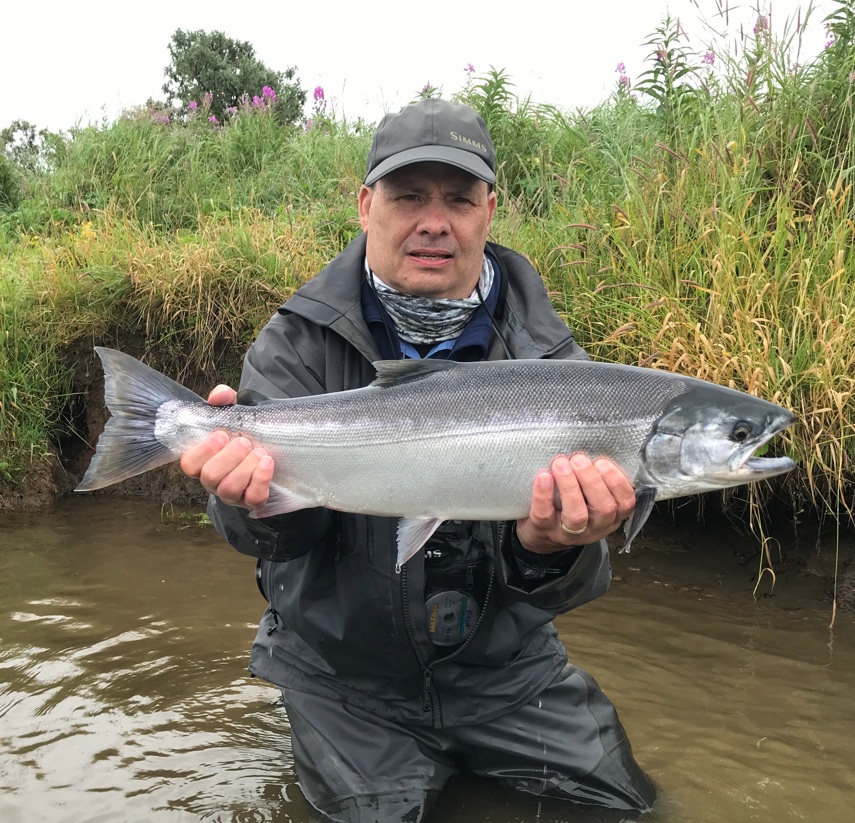
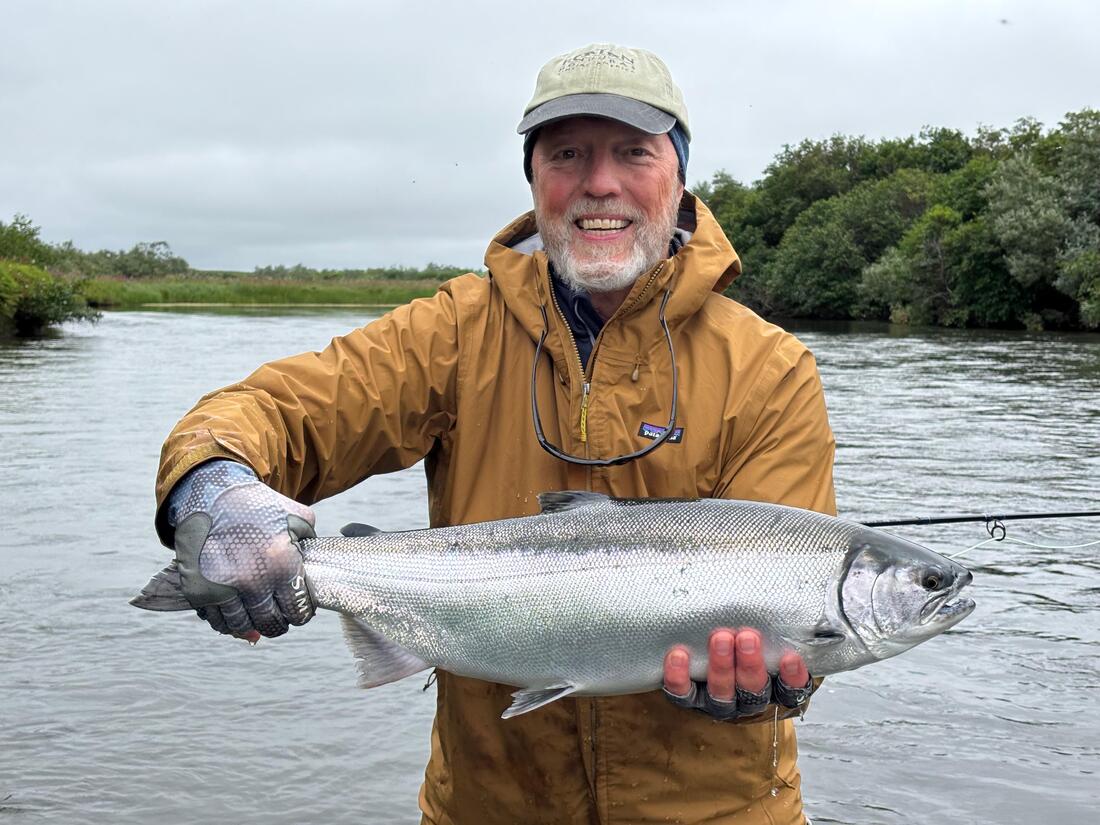
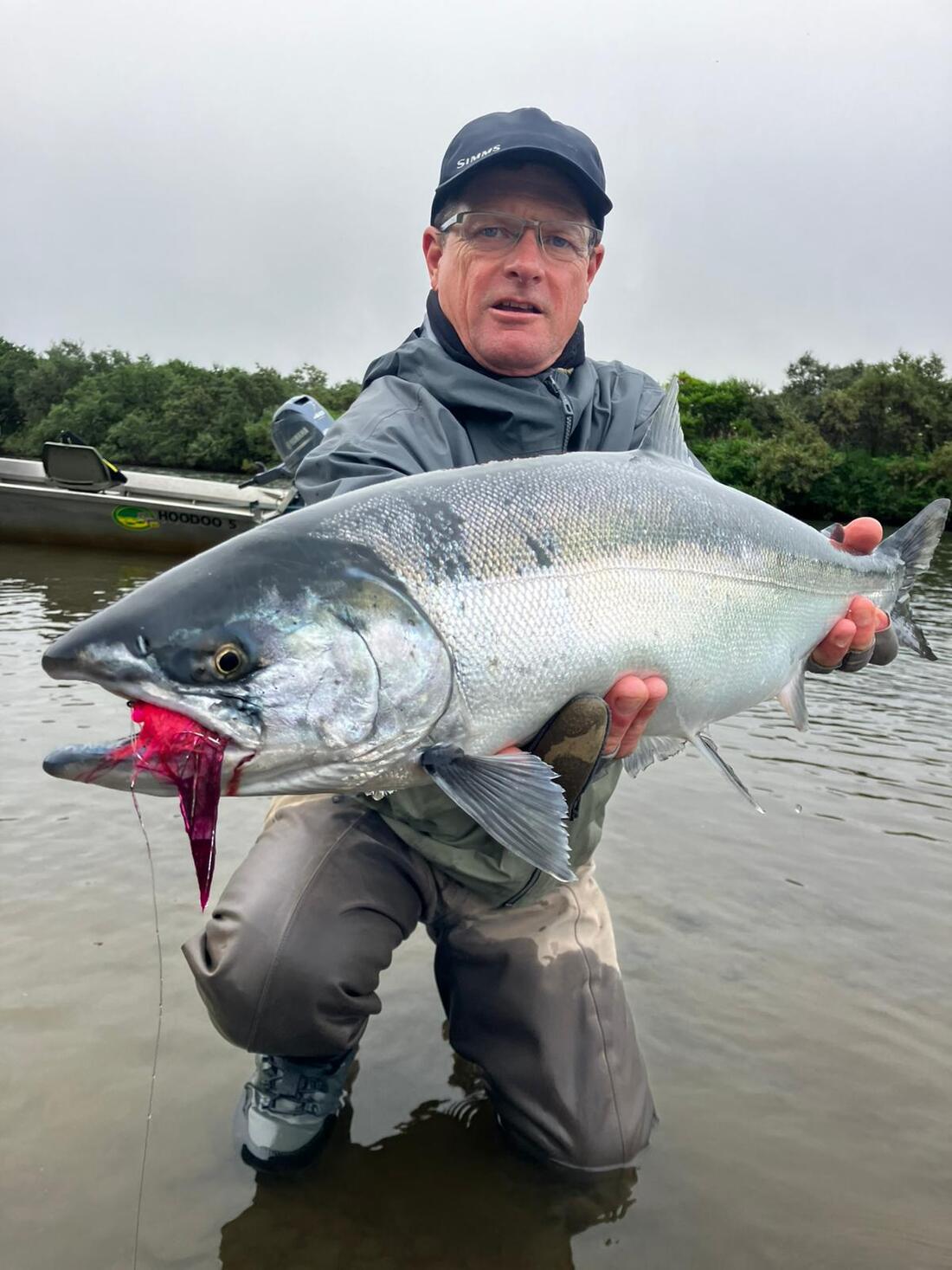
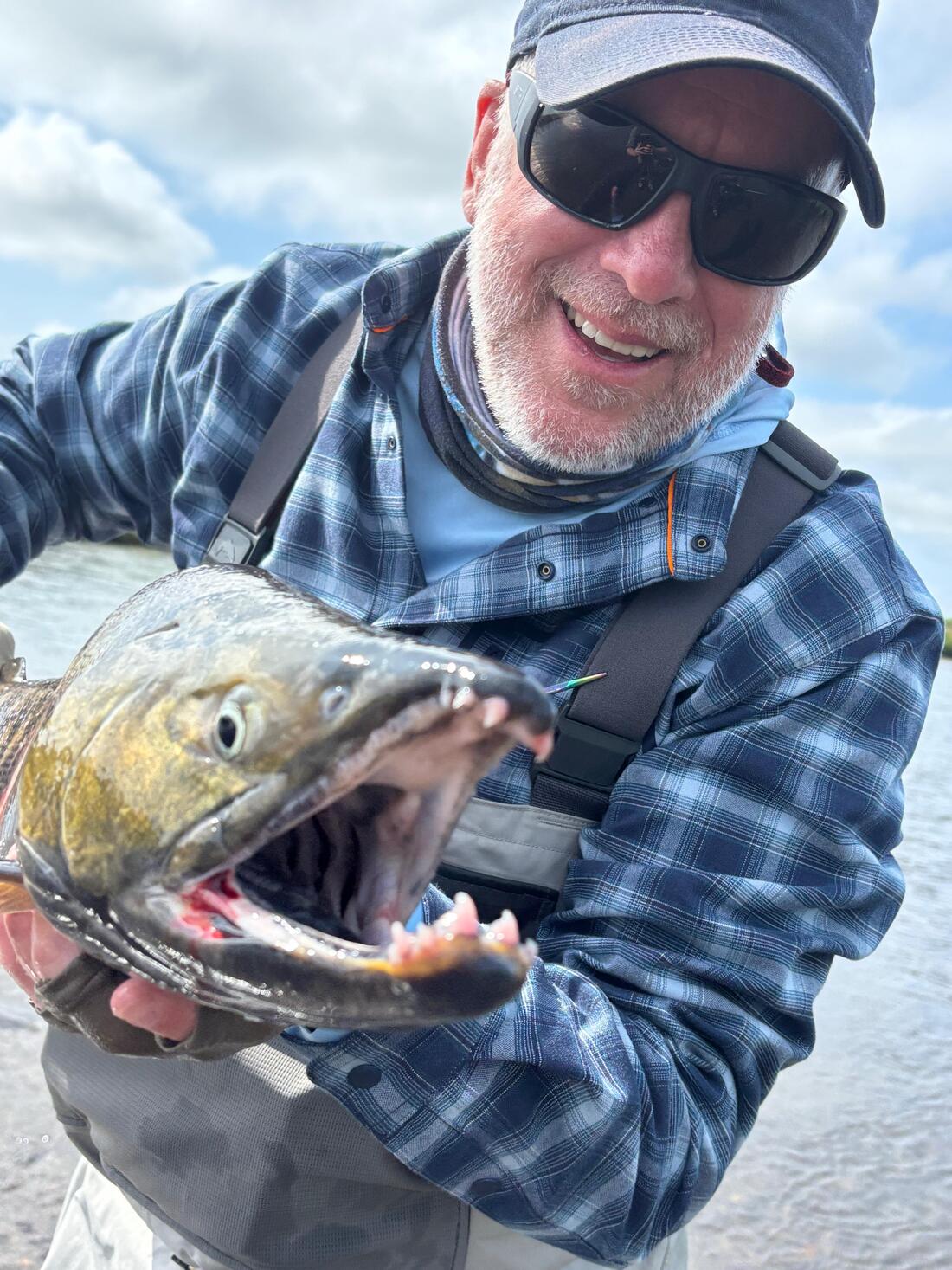
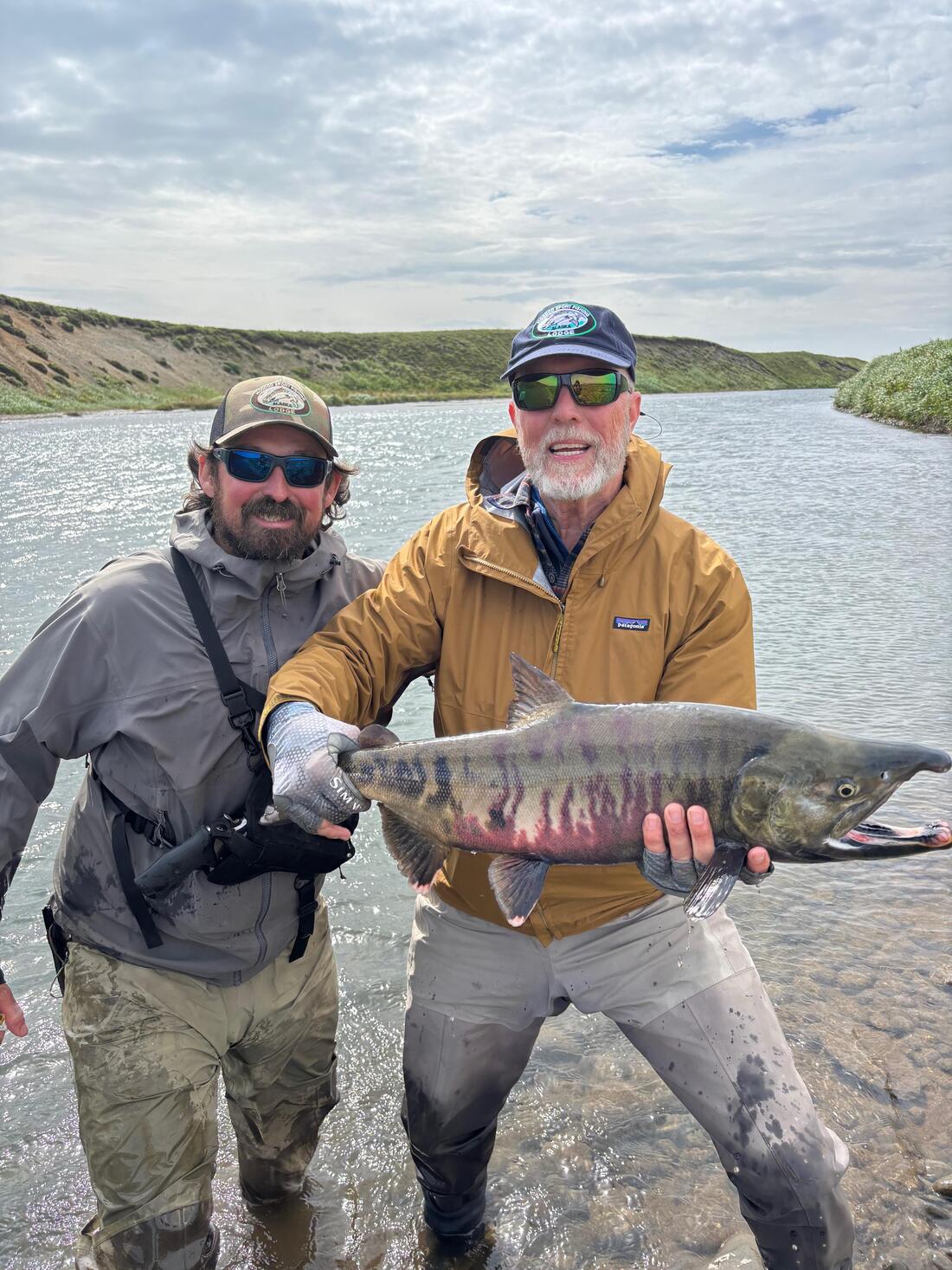
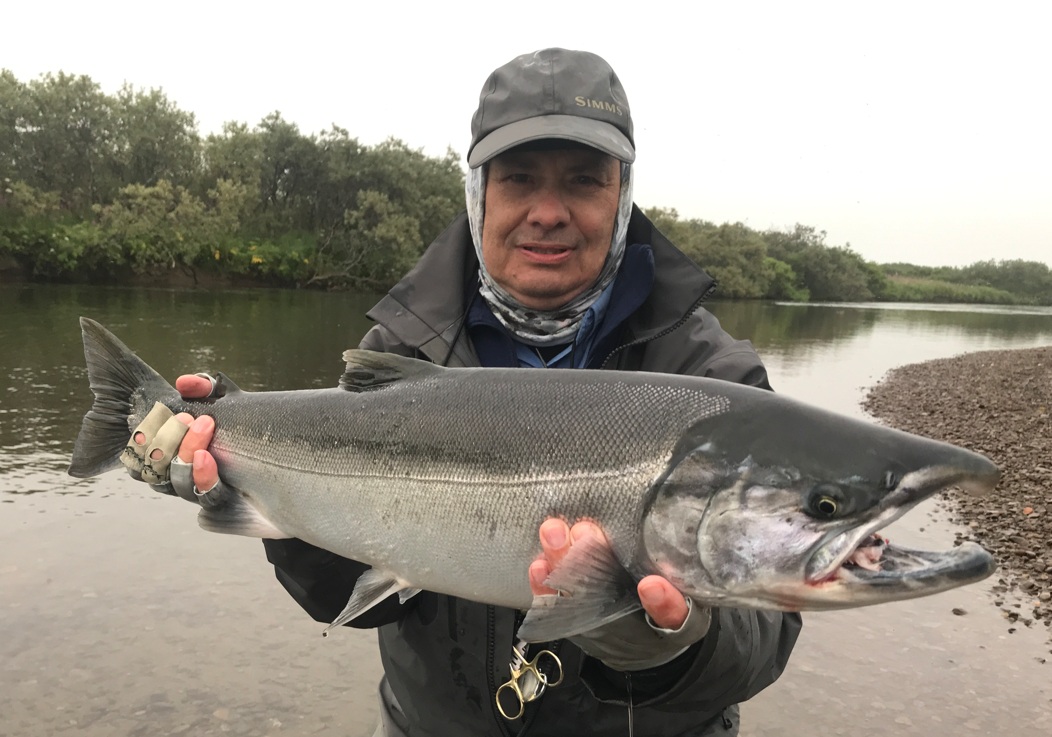
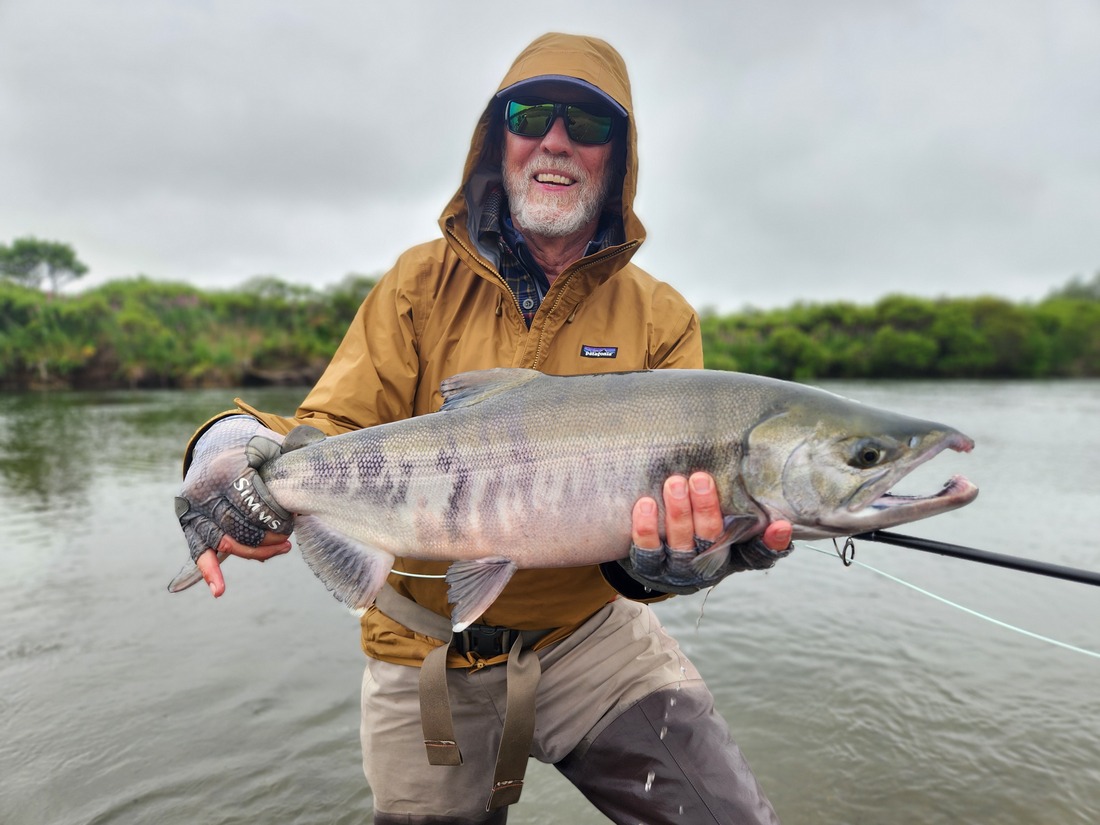
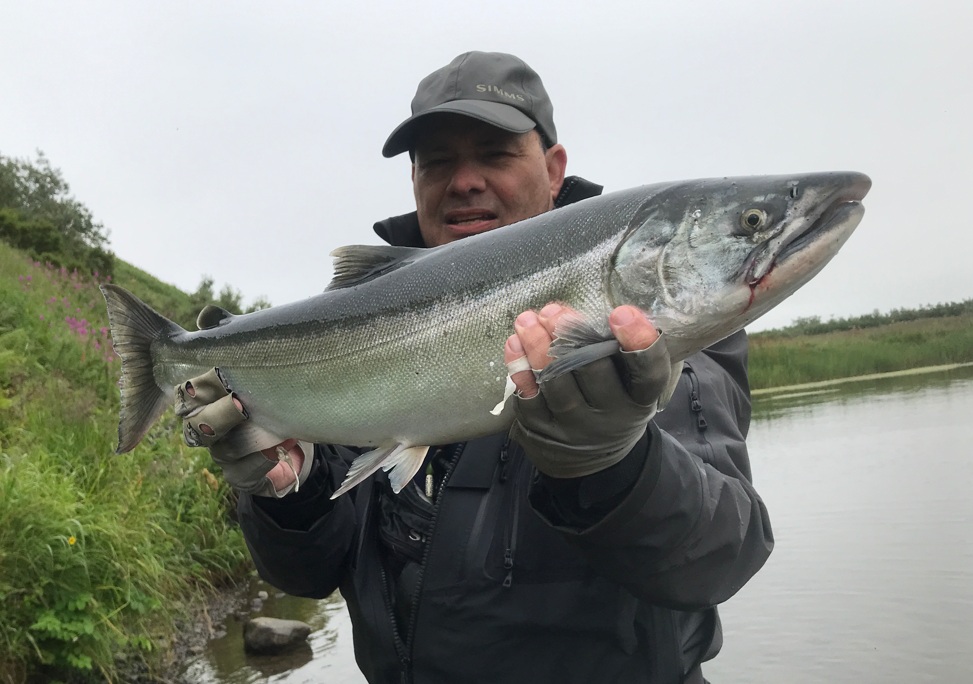
When our FATC group finally booked a week at Hoodoo Lodge, we couldn’t secure a prime silver salmon slot—the coveted last week of August. Instead, we took our chances with the closest available option: the third week of August, hoping to catch the early edge of the run. Fortunately, our gamble paid off. We landed a solid number of dime-bright, fresh silvers that lived up to their reputation. Chum salmon also showed up in good numbers, putting up spirited fights and proving themselves to be an underrated species. Along the way, we picked up a couple of sockeye and a few pinks, rounding out the salmonid lineup for the week.
My first encounter with a Hoodoo River silver salmon came on the very afternoon we arrived. Although our six-day fishing schedule wasn’t set to begin until the following morning, we had a couple of free hours before the 6 PM hors d’oeuvres—and the guides were already waiting at the boats, ready to take us out if we felt like slipping into our waders and sampling the water. Naturally, we all jumped at the chance.
We motored upstream, and as soon as I stepped out of the boat with my rod, I began shaking out my line with a fly attached. Within eight feet of the tip, a large silver salmon slashed at it—and just like that, I was hooked up with a 13-pound, dime-bright male. I was stunned. This week is going to be easy, I thought. The fish fought hard, and it took a while before we could finally net it.
Then came the letdown: it was foul-hooked in the pectoral fin. I have a tradition of photographing my first fish of every trip, but in my mind, a foul-hooked fish doesn’t count—so I passed on the photo. The guide had a priest in hand, ready to dispatch the fish, but I asked him to release it instead. We were all planning to return home with boxes of silver salmon, so I had no issue with harvesting fish. Still, the idea of eating one that wasn’t fairly caught didn’t sit right with me. I’d much rather dine on a noble, fair-hooked fish.
Thankfully, I was confident there would be plenty more chances—and I was right. Throughout the week, we all experienced the thrill of connecting with countless wild, dime-bright, acrobatic silver salmon. It was everything we’d hoped for—and more.
Silver salmon are typically plentiful in Alaska, allowing anglers to keep a daily limit of five fish without threatening the population. Still, it’s heartening to see that local guides treat the river with deep reverence and a long-term mindset. Notably, many guides choose to release all female silvers voluntarily, prioritizing the health of future runs. On several occasions, I hooked massive, acrobatic male silvers—fish that exploded through the pool, sent my reel screaming into the backing, and put on unforgettable displays of power. Yet after netting these extraordinary specimens, the guide would gently release them. He explained that such fish carried the genetic traits they hoped to preserve and pass on to future generations.
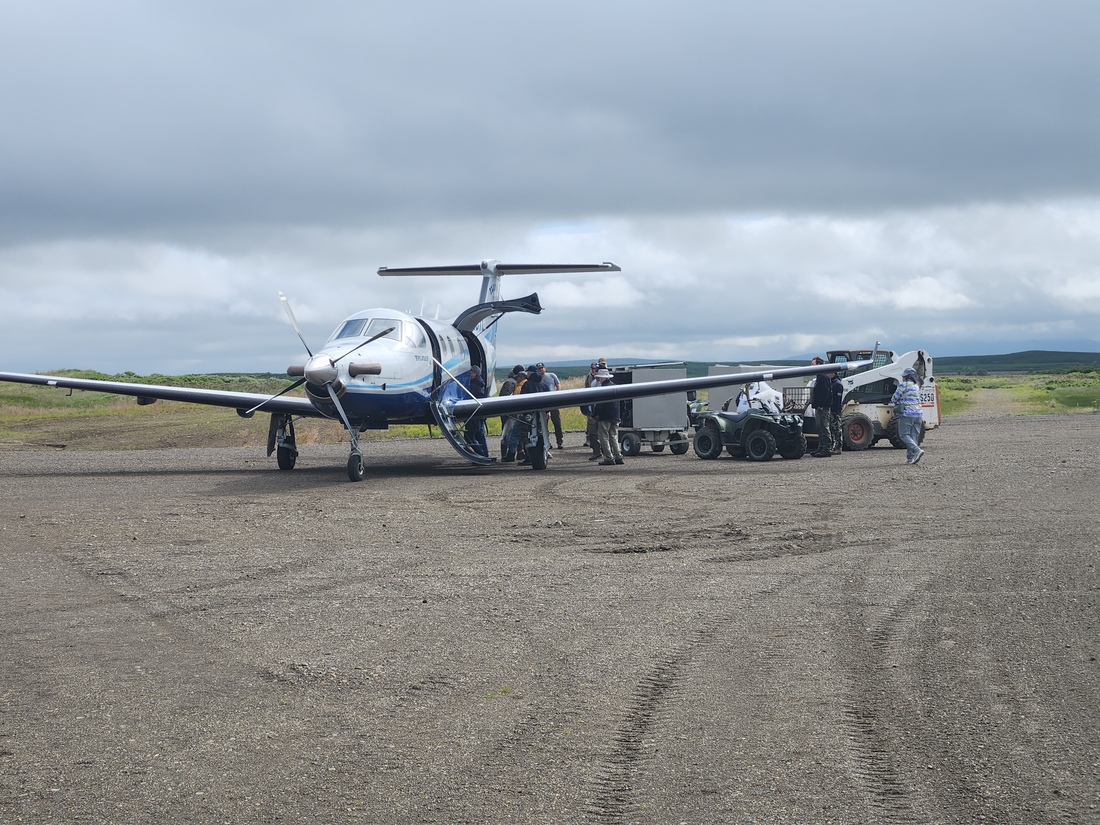
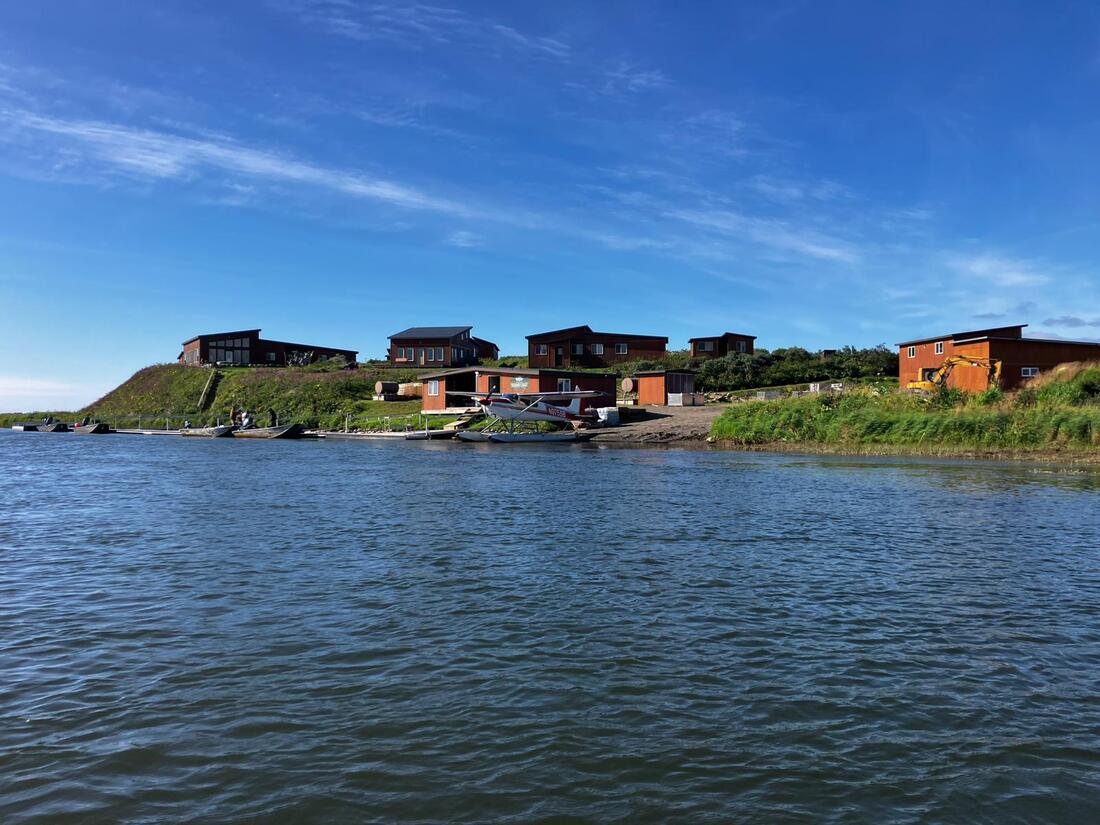
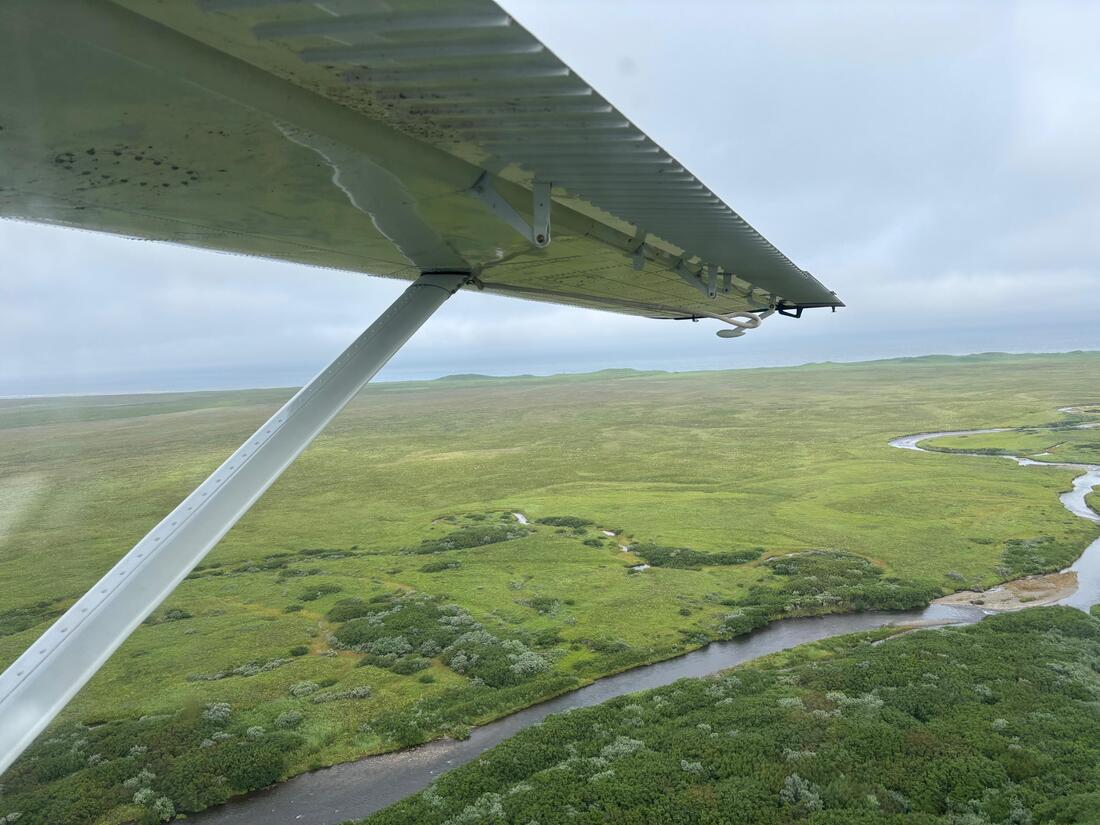
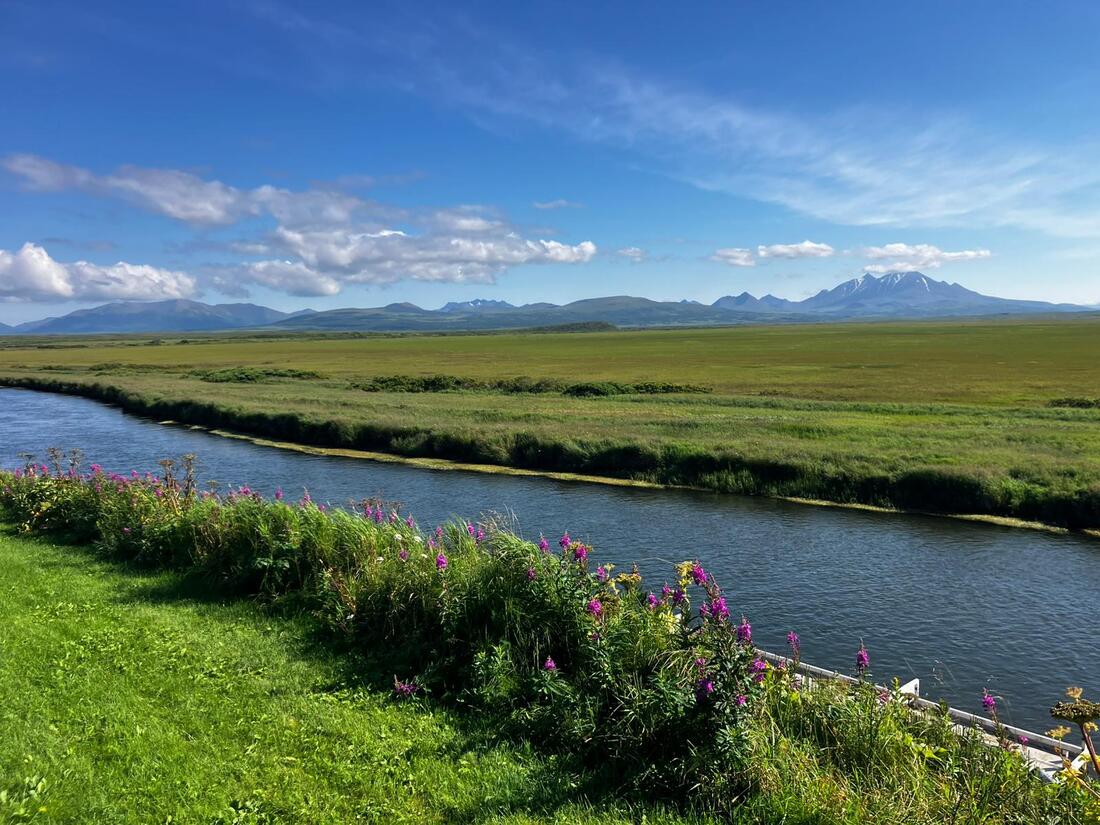
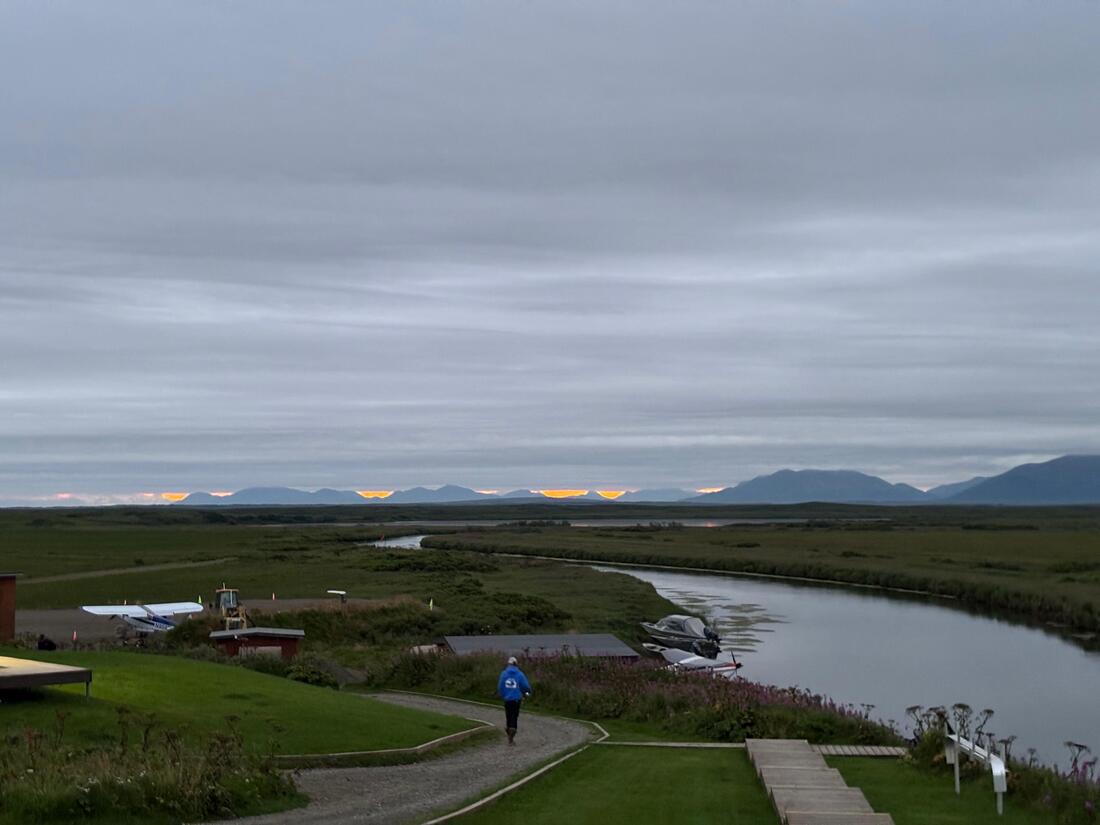
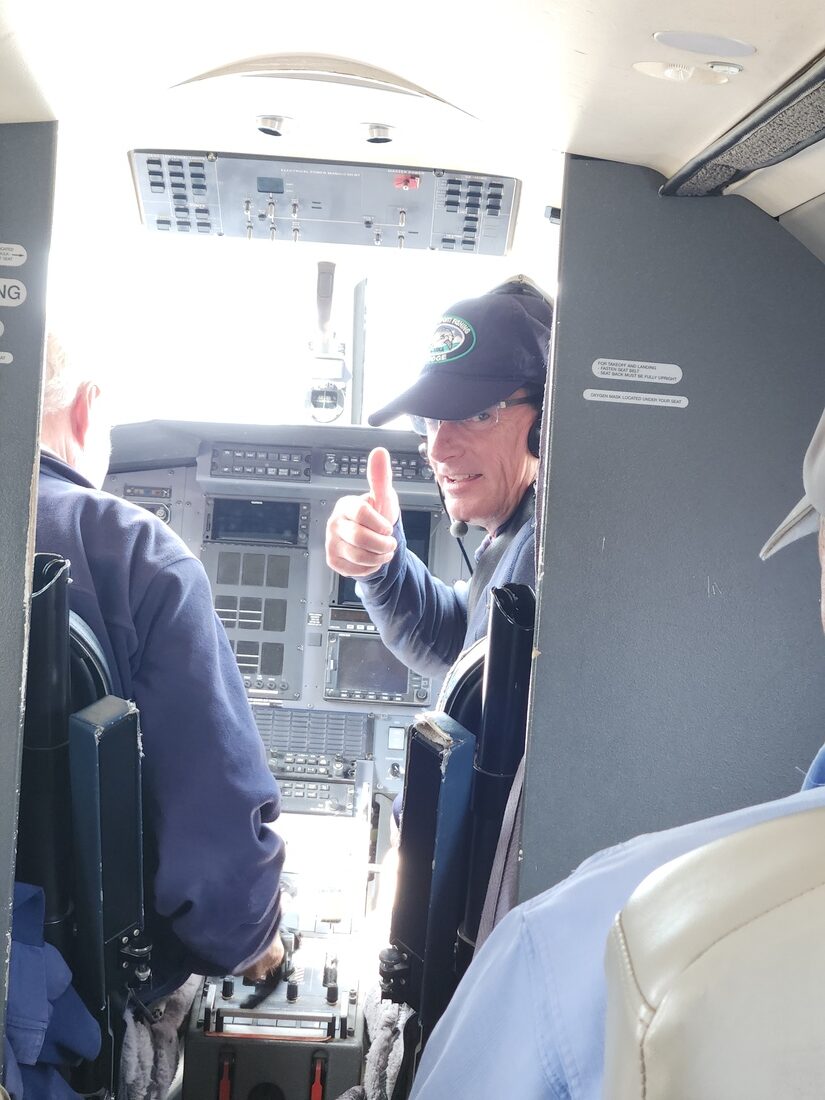
Hoodoo Lodge sits deep in the wilds of the Aleutian Alaska Peninsula, so remote that the only way to reach it is by a privately chartered 2.5-hour flight aboard a nine-passenger Pilatus PC-12 prop aircraft, covering 530 rugged miles from Anchorage. Until recently, guests had to transfer via the lodge’s DeHavilland Beaver from the coastal village of Nelson Lagoon, 10 miles away on the Bering Sea. But two years ago, the construction of gravel runways at the lodge eliminated that extra leg, streamlining access while preserving its off-the-grid charm. Given the isolation and the $1,800 value of the charter flight alone, the lodge’s rates feel entirely justified.
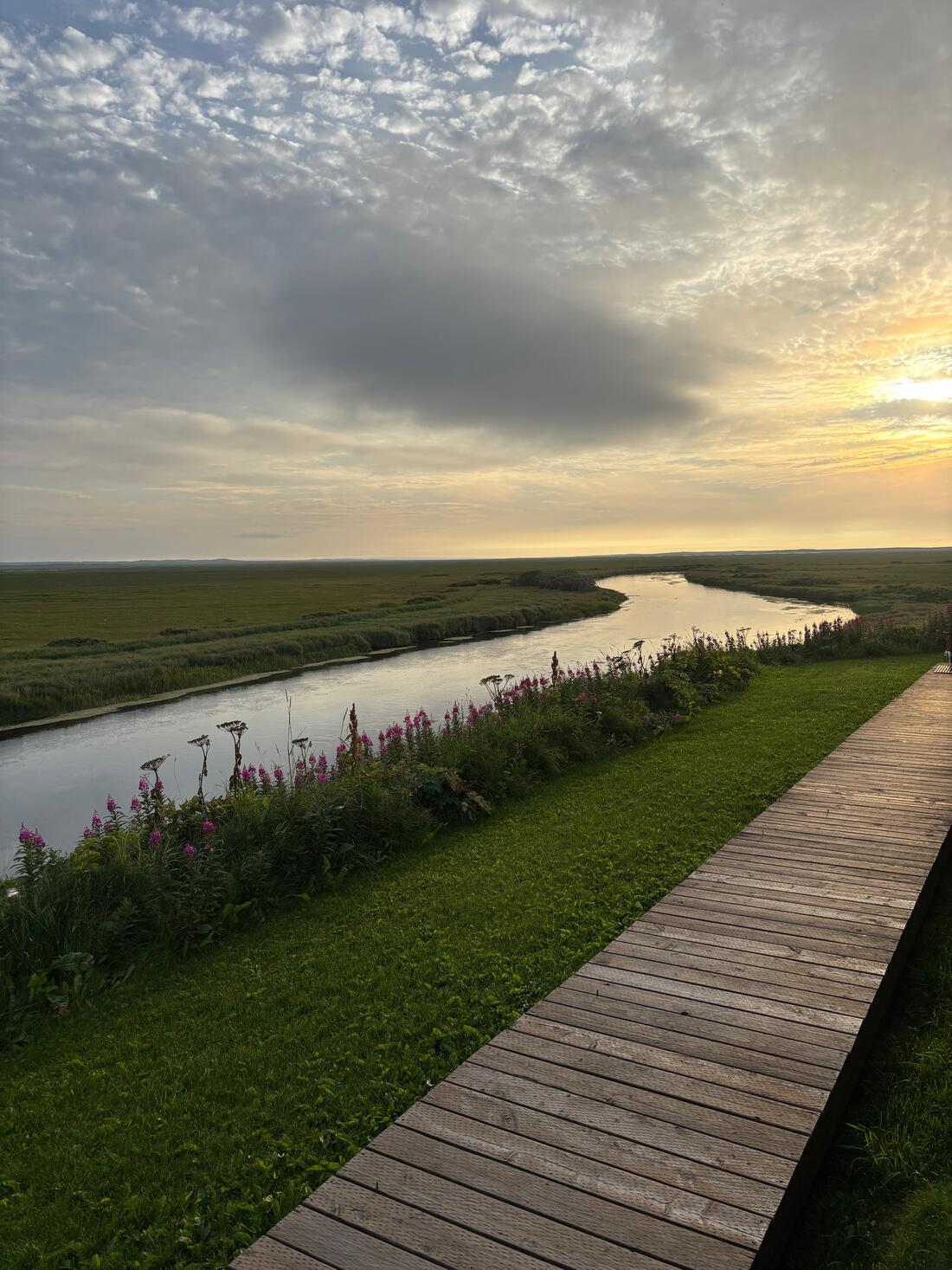
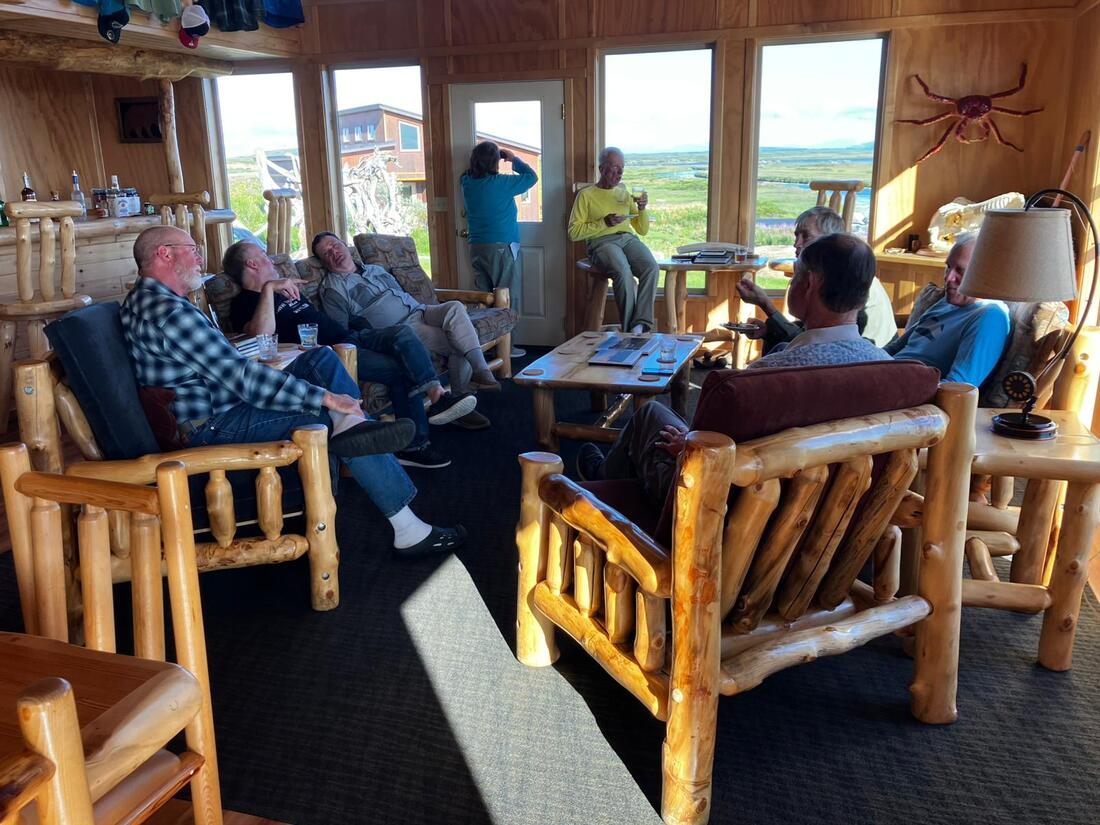
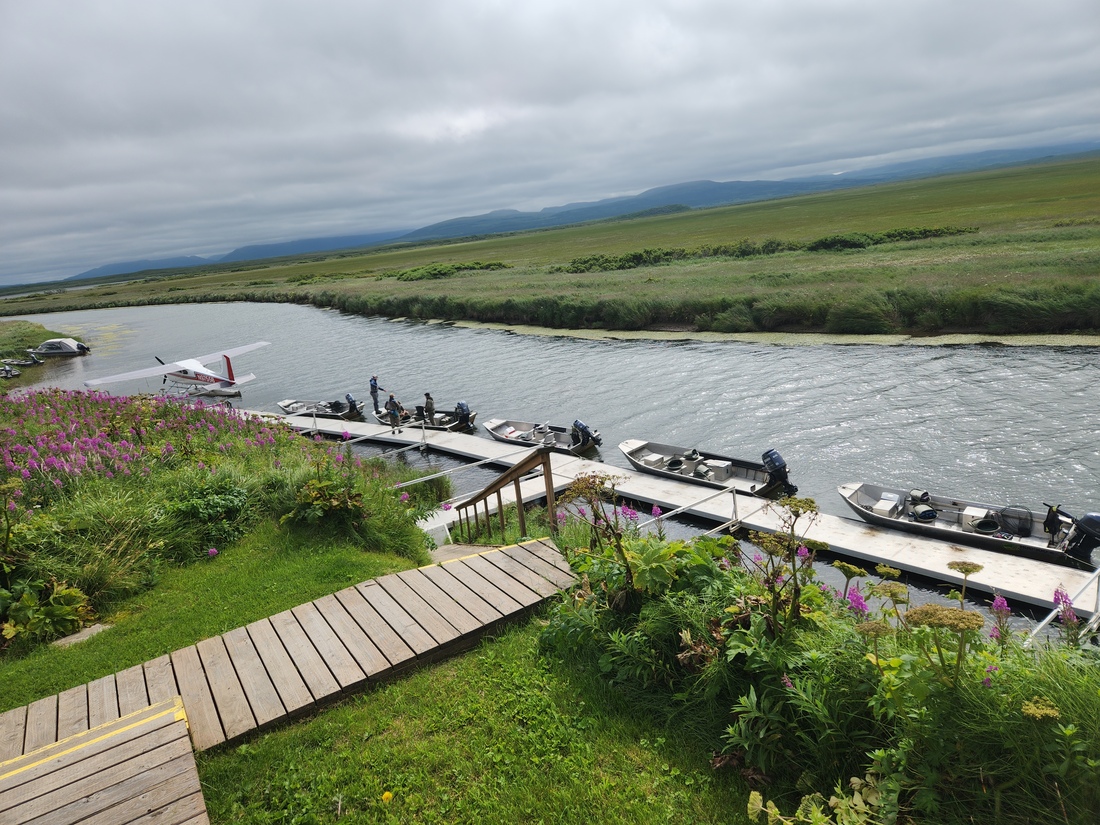
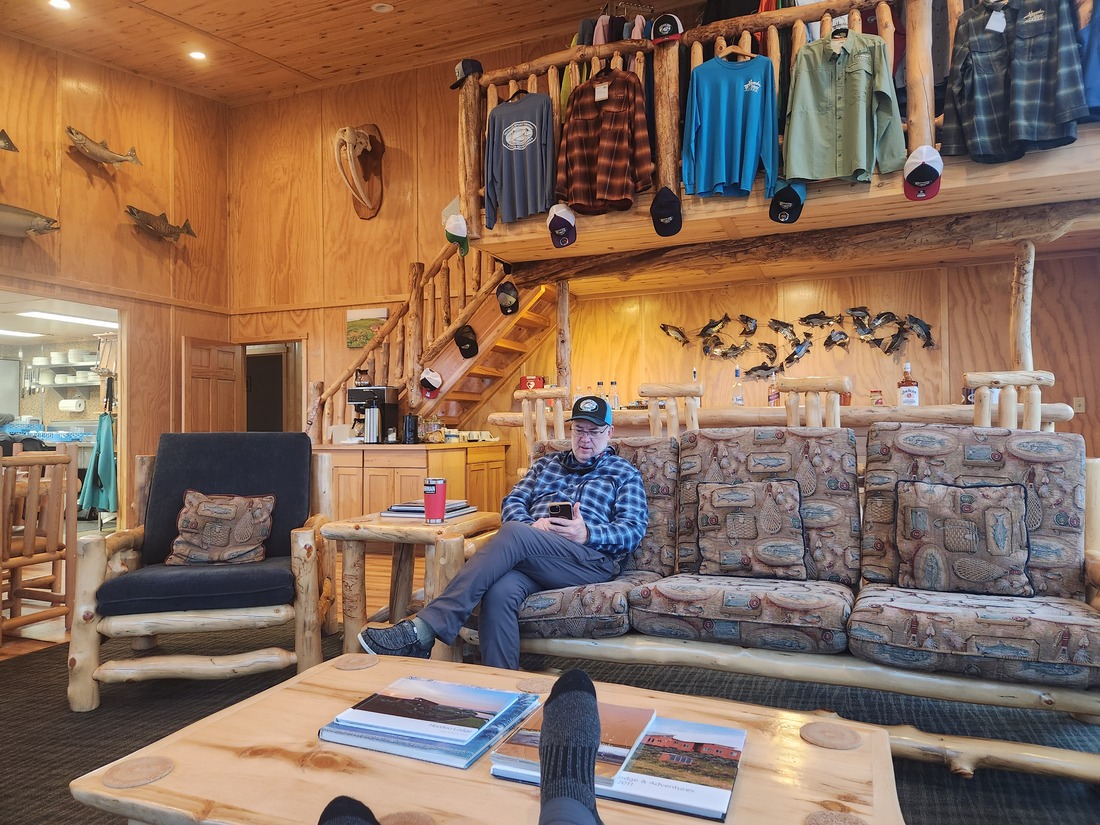
From the moment we arrived, we were struck by the sheer scale, comfort, and pristine condition of every aspect of the lodge. Everything operated with seamless precision—from the spotless toilet and shower rooms to the spacious wader changing area. Even the boardwalk connecting the cabins to the boat dock was thoughtfully designed and impeccably maintained, adding to the sense that no detail had been overlooked.
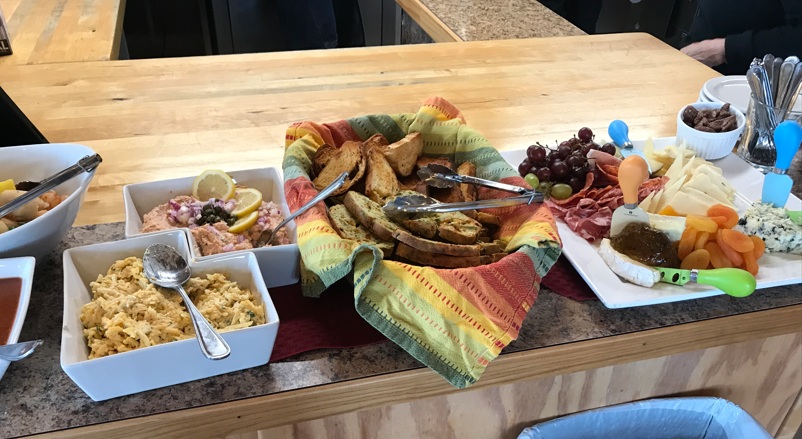
Every meal at the lodge was exceptional. Breakfast was served promptly at 7 AM, featuring eggs cooked to order alongside bacon, sausage, potatoes, and often a delicious bonus—pancakes, waffles, or French toast. By 8 AM, the guides were ready and waiting at the boat dock to kick off our day on the water. Lunch was enjoyed streamside, typically a comforting spread of hot soup and hearty sandwiches, with chips, cookies, and brownies rounding it out. We’d return to the lodge around 5 PM, with just enough time to freshen up before open bar and hors d’oeuvres were served at 6. Dinner followed at 7 PM, always accompanied by decadent, artfully prepared desserts. Despite the indulgence, we were all surprised to have gained only a couple of pounds over the week—apparently, casting and battling silver salmon burns more calories than you’d think.
The lodge operates six jet boats and can accommodate up to 14 anglers per week, assuming a few boats carry three fishermen per guide. Our FATC group chose to pay a bit extra for a two-to-one ratio—two fishermen per guide and boat—which gave us more space to fish each pool comfortably and proved invaluable when we hooked doubles and needed help netting fish quickly. With four of us in the group, we rotated partners and guides throughout the week, which added variety and made the experience even more enjoyable.
One of the most appealing features of the Hoodoo River—also known as the Sapsuk River—is its crystal-clear water and ideal size. Even when the bite slowed, especially under an unexpected burst of afternoon sun, we could still see fish holding in the pools, which kept our spirits high. In contrast, I’ve fished many murky, deep rivers where visibility was nonexistent. You’d cast blindly, hoping for a strike, but even after dozens of attempts, you were left wondering whether any fish were present at all. Salmon can be fickle—stacked in a pool one day and completely gone the next—which makes that uncertainty all the more frustrating. Fortunately, the Hoodoo is just large enough to be fully navigable by jet boat, offering access to every productive stretch. I once spoke with a well-known silver salmon lodge that described how water levels often dropped after the fish pushed upstream, leaving their jet boats stranded and forcing anglers to hike five miles each day just to reach the fish. Not exactly my idea of a relaxing fishing trip.
What makes the Hoodoo River especially well-suited for fly fishing is its modest size—just right for wading and casting with precision. In contrast, many other Alaskan streams I’ve fished had Silver Salmon tucked away in deep, inaccessible backwater pools, where the only viable approach was from a boat. For a fly angler, that’s a frustrating limitation. More than once, I’ve seen people abandon their fly rods altogether and switch to spinning gear just to reach the fish—hardly the experience you hope for on a high-end trip to Alaska.
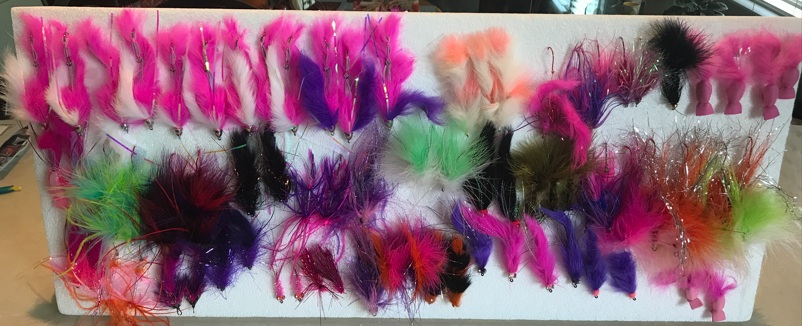
Although the Hoodoo River hits that sweet spot—large enough for jet boat access yet small enough for fly fishing—it still demands more than what most anglers are used to on small spring creeks. Those accustomed to fishing with a 5-weight rod will quickly find that the river’s powerful fish and heavy flies call for an upgrade. An 8-weight fly rod paired with a sturdy reel is ideal for handling the larger salmon and making the long casts often needed to effectively swing or strip flies across the pools. In many spots, limited backcasting room meant we had to rely on long roll casts, which are no easy feat with weighted flies.
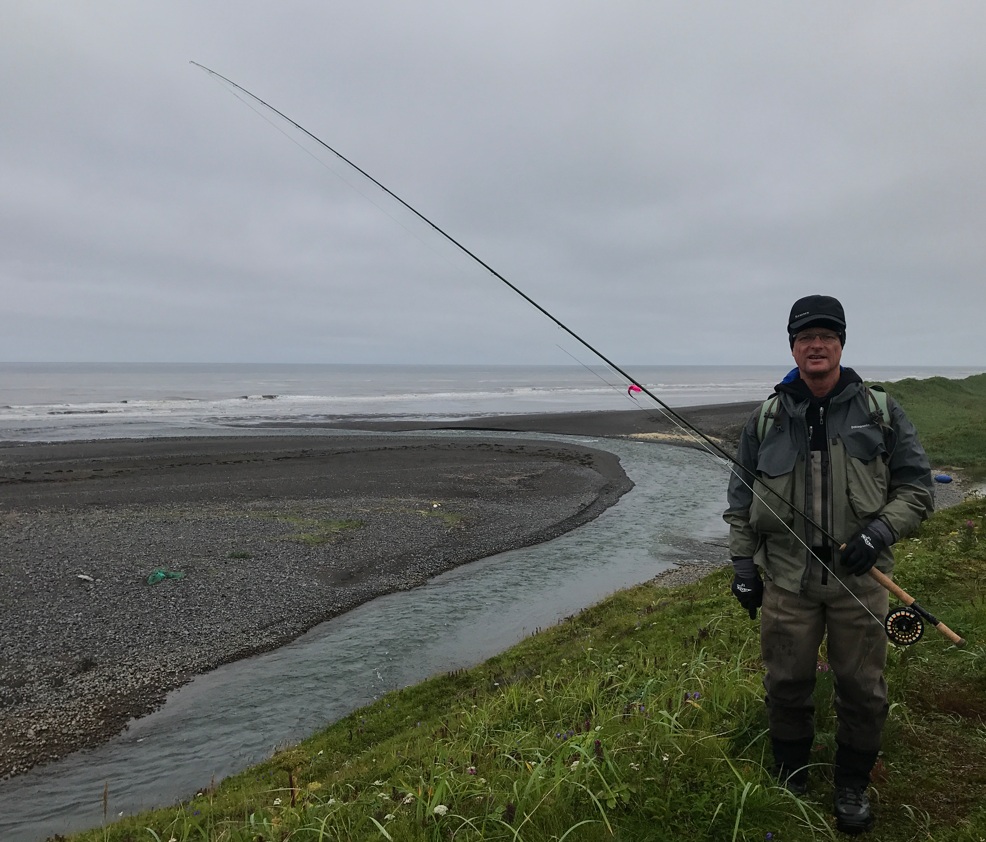
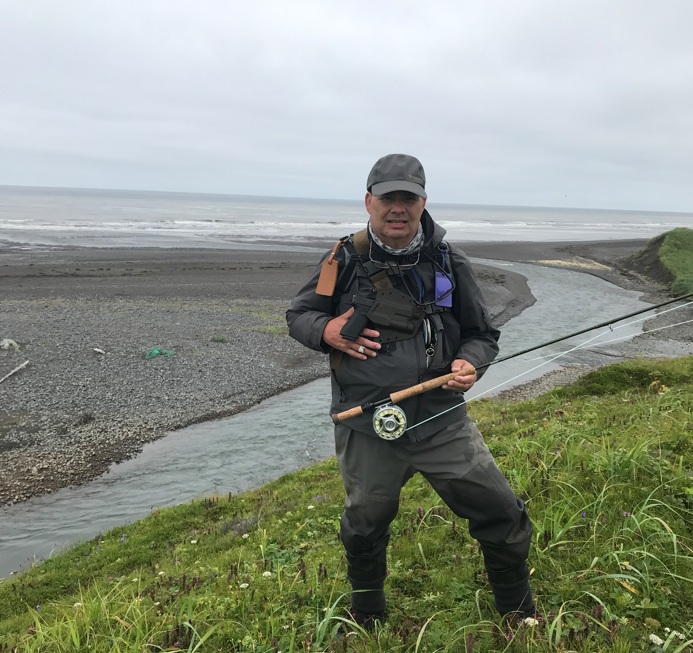
Knowing these challenges, Matt and I came prepared with two-handed Spey rods—specifically, 11-foot switch rods. A switch rod is a shorter two-handed rod that can also be cast single-handed in a pinch, offering versatility in tight quarters. Matt, who’s been deeply immersed in two-handed casting for several years thanks to his cousin in Bozeman (a Spey casting expert), was eager to put his skills to use. I’ve been fishing with the same switch rod for steelhead and salmon for over two decades, and it’s never let me down.
Jim took up two-handed casting specifically for this trip, and I’m certain he’s glad he did—it’s not only more effective for this style of fishing, but also a lot more fun. Matt and I helped him through the learning curve, focusing on Skagit casting—a technique that uses a short, heavy-headed fly line to deliver big flies with minimal effort. Sterling, a skilled caster in his own right, stuck with a single-handed rod throughout the week. He managed well, but he felt the strain on his body and arm as the days wore on. Unlike the rest of us, Sterling had limited time to prepare due to work commitments and couldn’t fully gear up for the trip.
The rest of us spent weeks dialing in our setups—practicing casts, testing rods, and fine-tuning our lines and reels. During one casting session on the Meramec River in St. Louis County, Matt tried my old 11-foot, 8-weight switch rod and was instantly hooked by its smooth, responsive feel. In a last-minute scramble, he tracked down the exact model online and had it overnighted—just in time for the trip, where it served him beautifully.
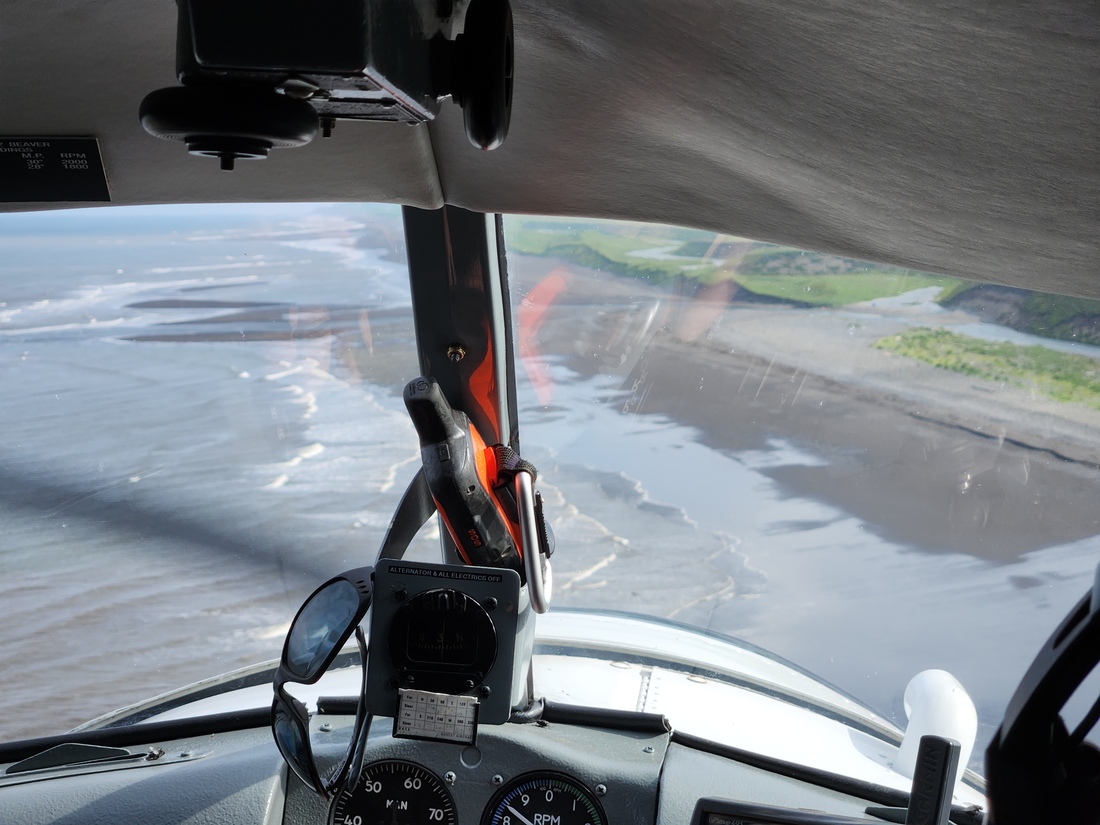
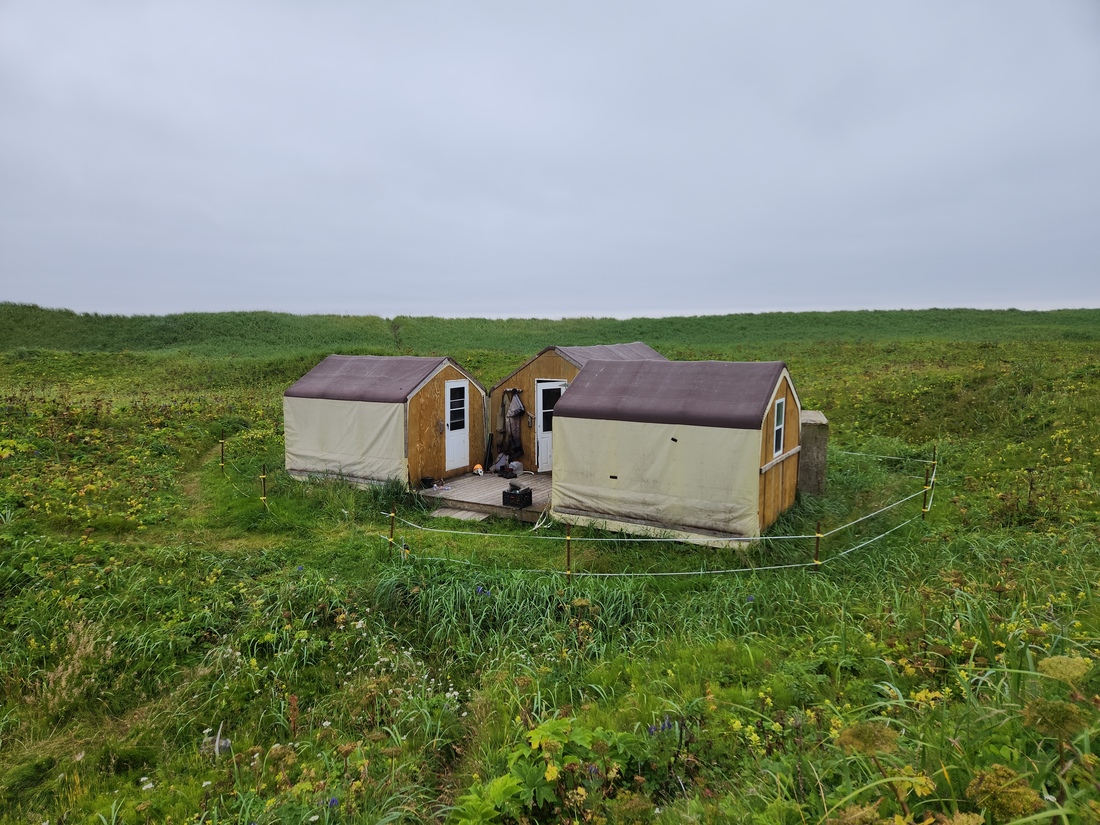
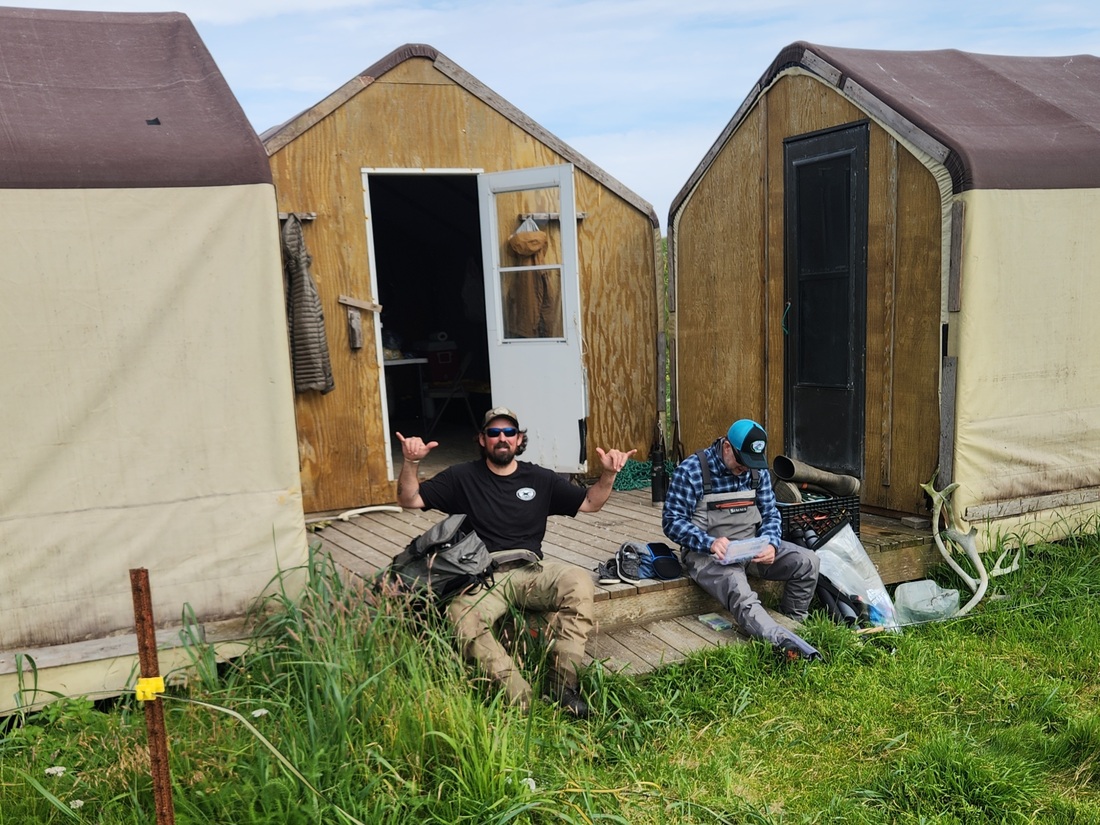
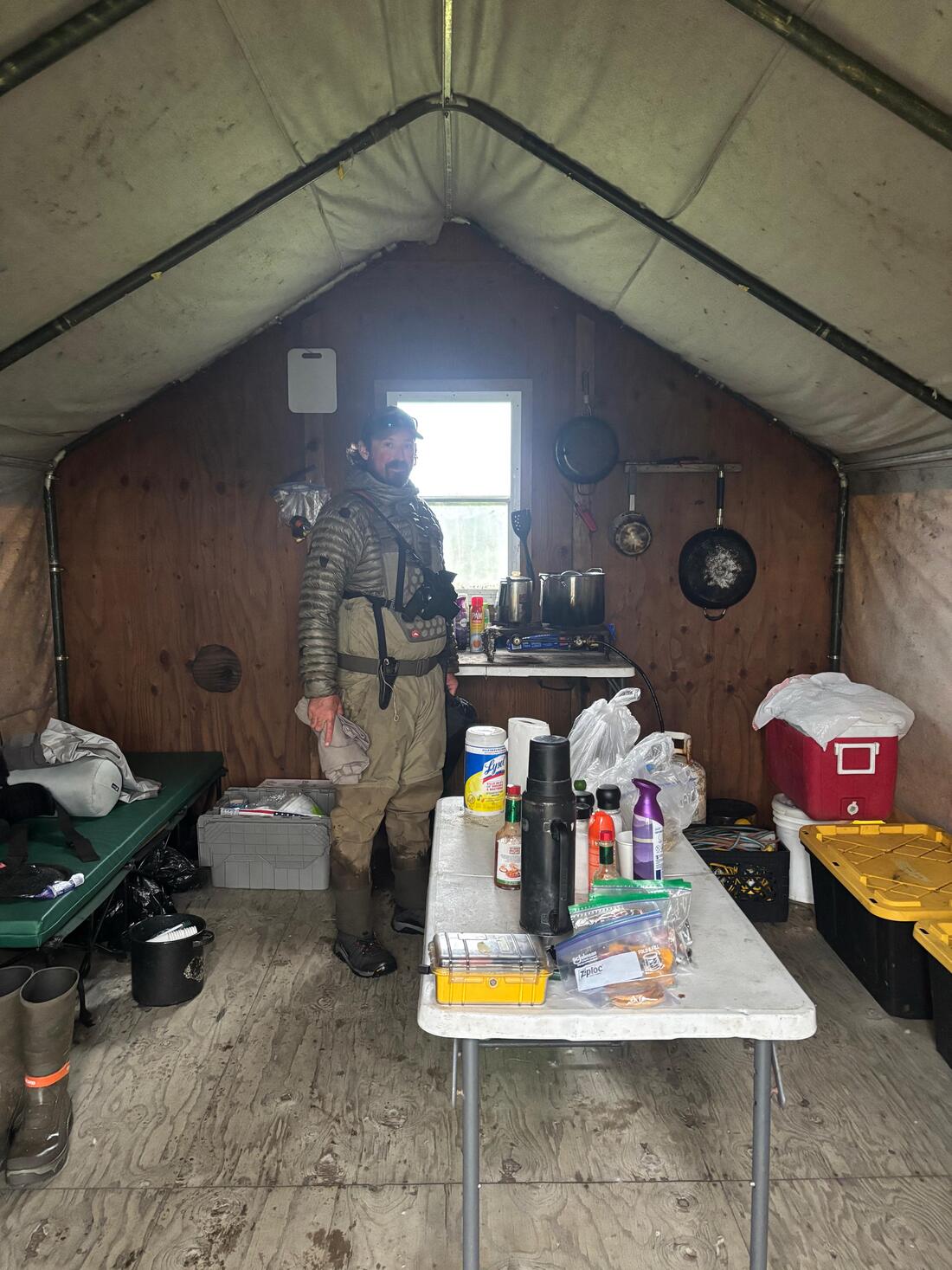
Our package at Hoodoo Lodge included a fly-out trip and the overnight camp next to the Bering Sea at North Creek especially caught our attention. We’d seen YouTube videos posted from past visitors and were intrigued by the remote, rugged beauty of the place. Rod, the lodge owner and pilot, explained that he could fly a guide and three guests at a time. Since there were four of us, he offered to split the group into two separate overnight trips. None of us wanted to miss out or be the odd man out. On Monday, Rod flew Jim, Sterling, and their guide Ian to the camp, where they spent the night. On Tuesday, Matt, Logan (our guide), and I (Brian) flew out to begin our excursion, while Rod brought the first group back.
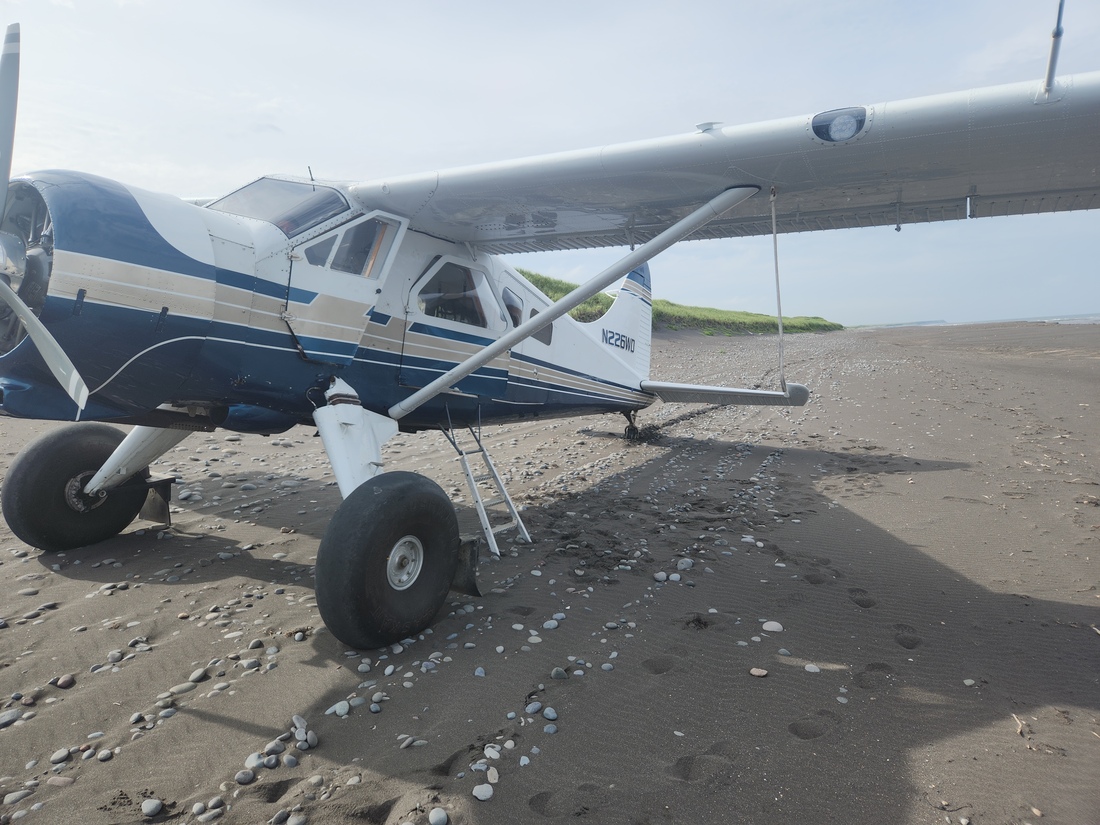
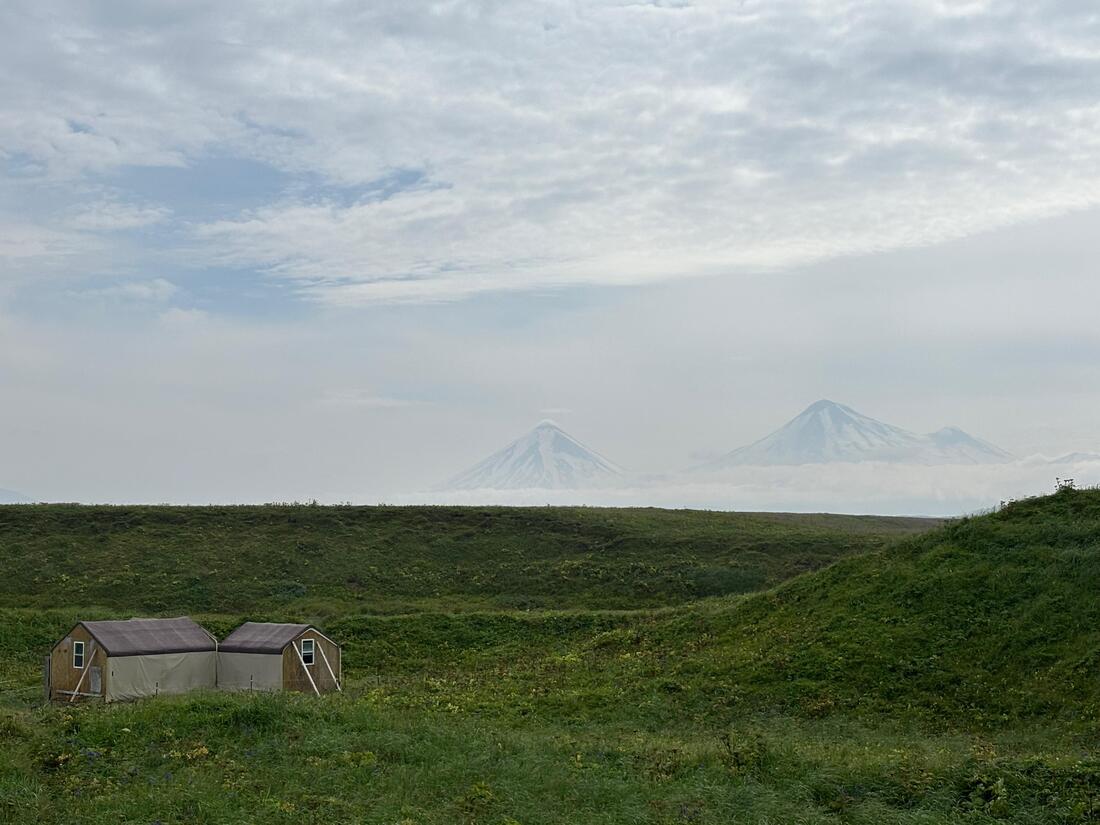
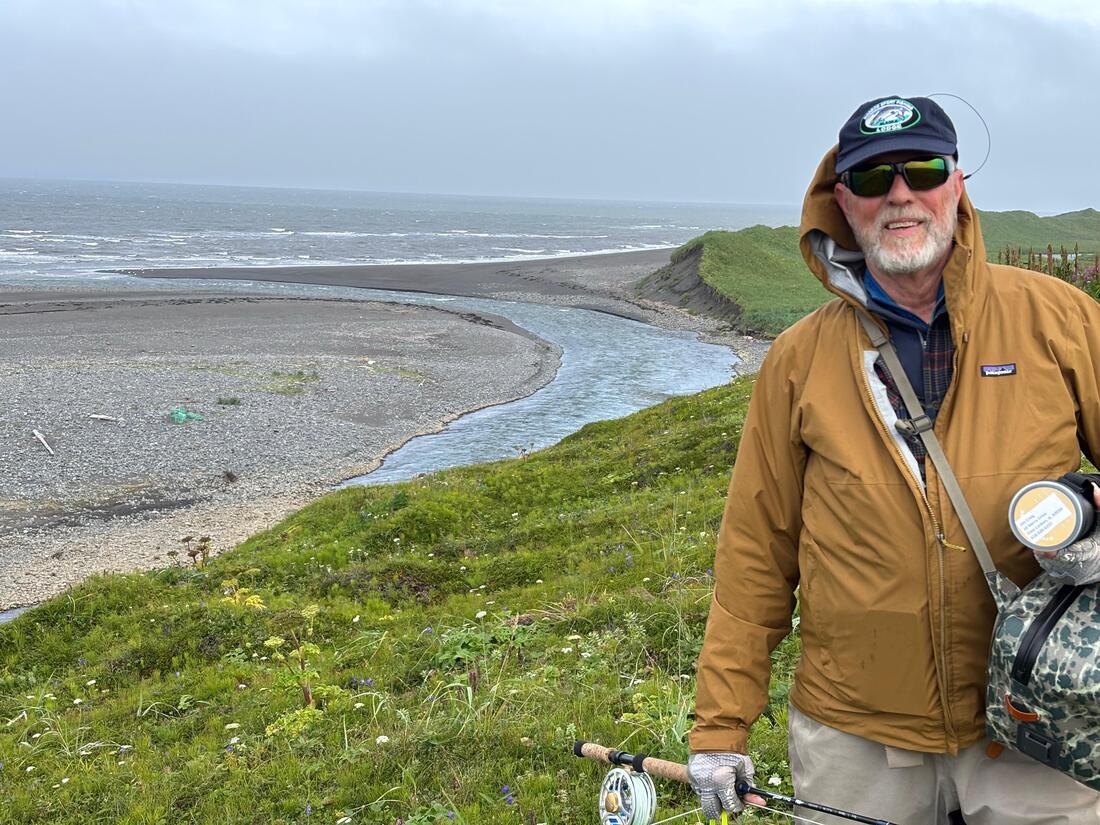
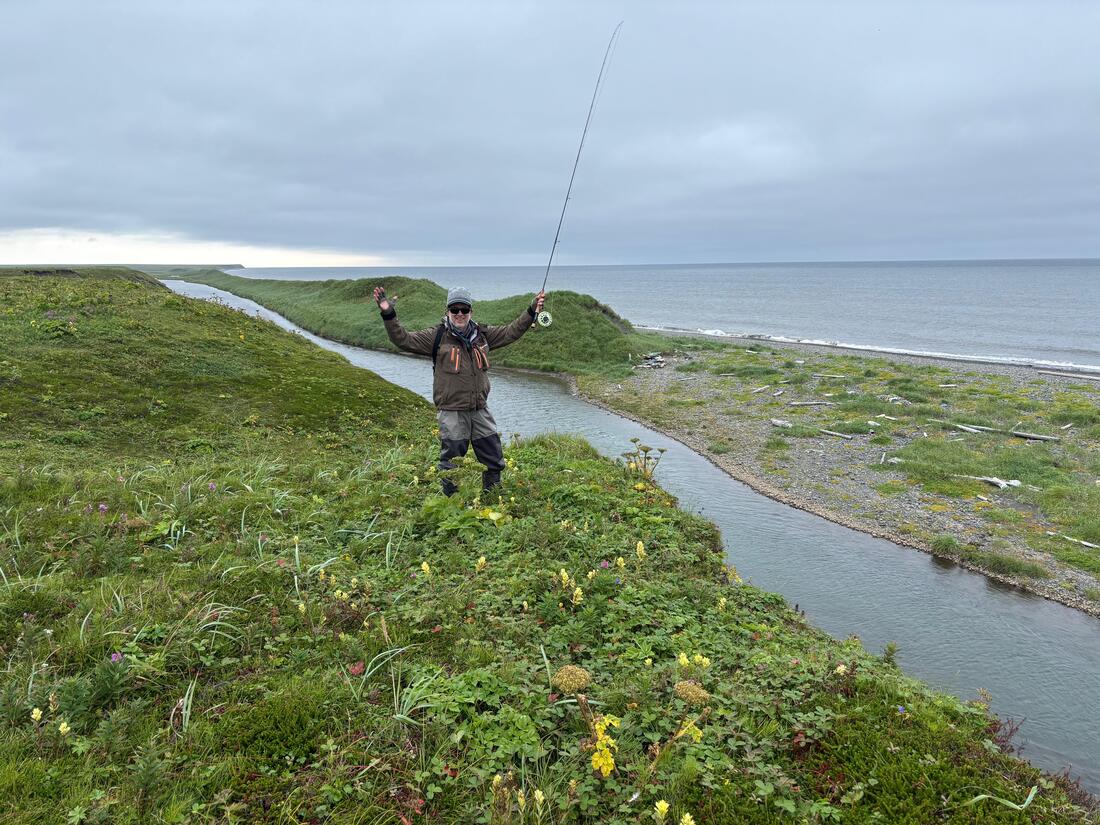
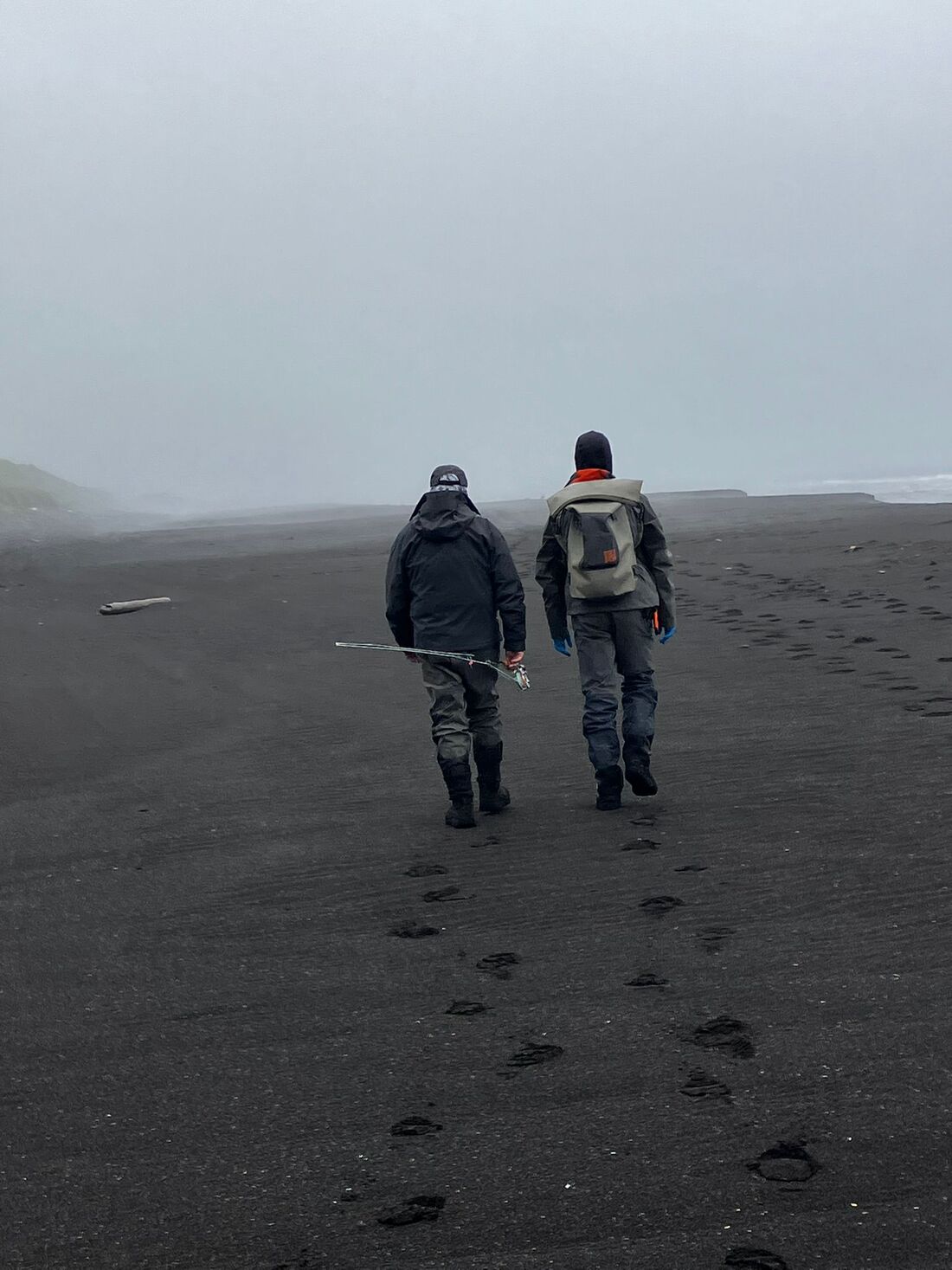
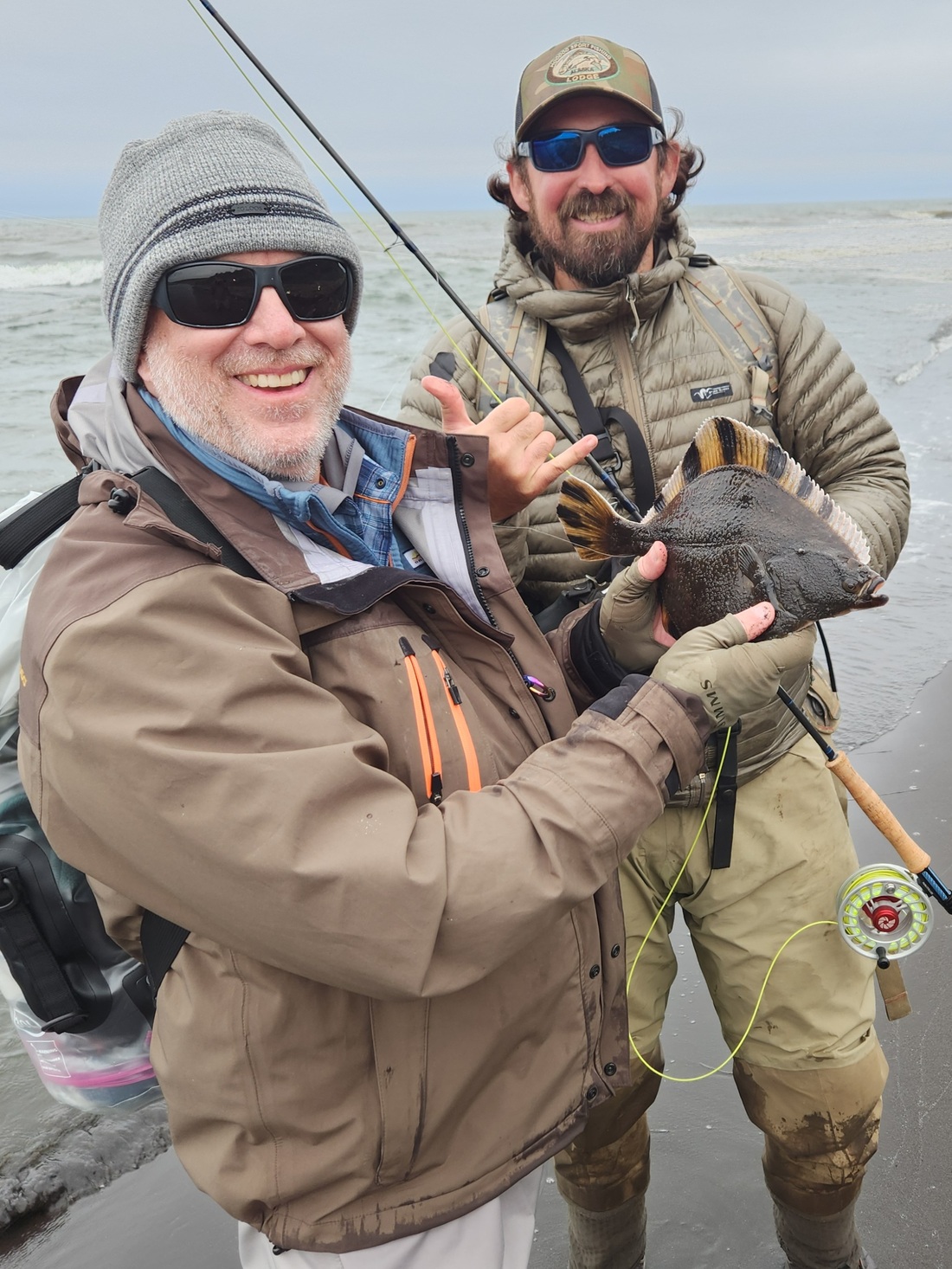
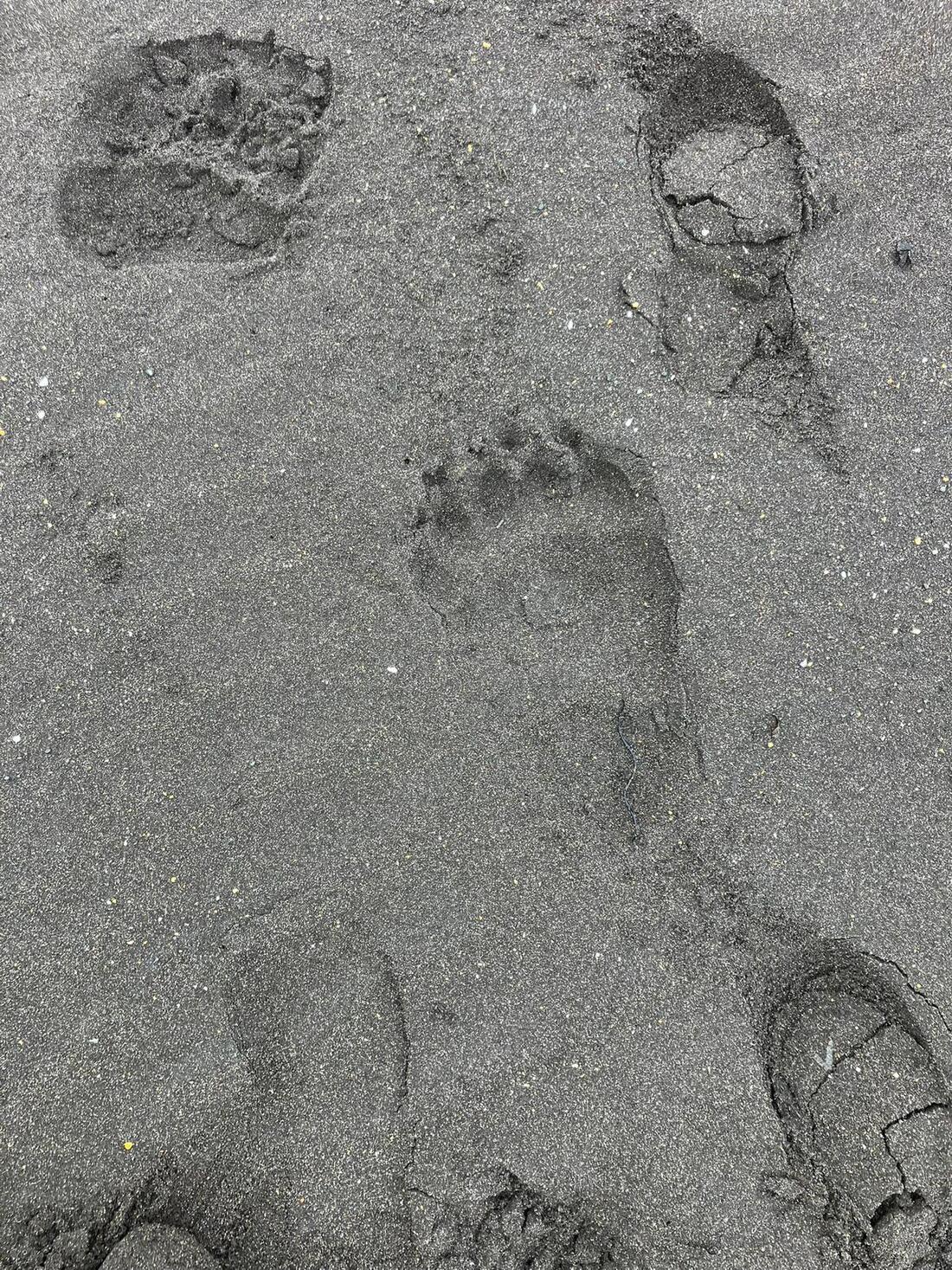
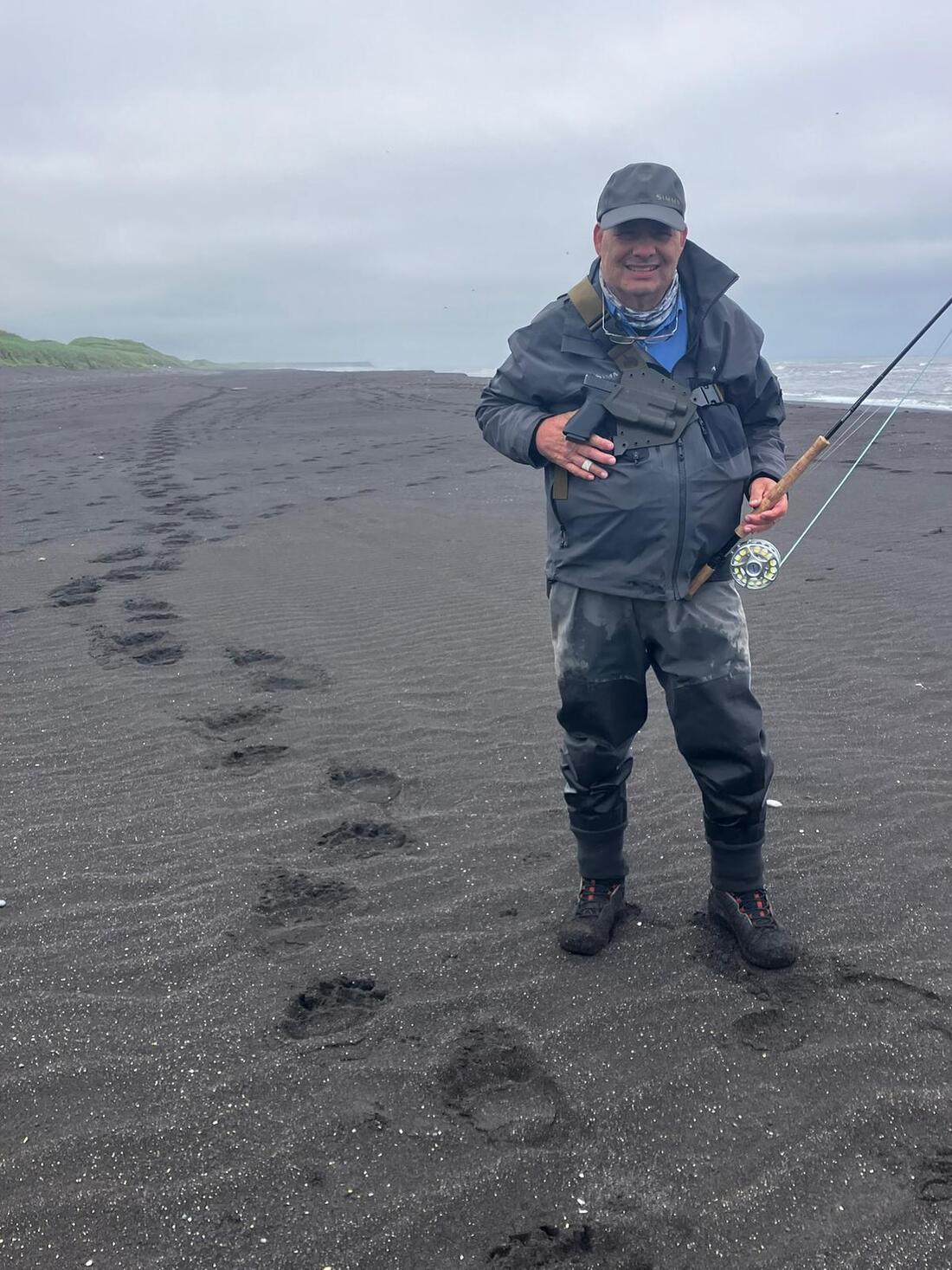
Yes, we all caught Silver and Chum Salmon at North Creek, but the fishing could have been better. Before we left, Rod, the lodge owner, clearly emphasized the fishing would be better on the Hoodoo River, next to the lodge. Nevertheless, everything about the North Creek excursion was truly special and we never regretted going there. We thoroughly enjoyed skimming low over the untamed Alaskan landscape in a 70-year-old DeHavilland Beaver, spotting herds of caribou, elegant sandhill cranes, and one particularly disgruntled, massive Alaskan brown bear. The takeoff and landing on the Bering Sea beach, cushioned by the aircraft’s oversized balloon tires, was a thrill none of us will soon forget. Standing on the high ridge, gazing out over North Creek—with its enticing salmon waiting to be caught—and the distant Bering Sea, where waves broke rhythmically against the shore, we were struck by the incredible solitude, knowing no one else was around for dozens of miles.
At the end of our trip, on change-out day, poor weather socked in the lodge, preventing the incoming charter flight from arriving and forcing us to stay an extra day. Although it was unfortunate, staying over at the comfortable lodge was far preferable to being stranded in an airport. Fortunately, we were able to reschedule our flights out of Anchorage just one day later than planned.
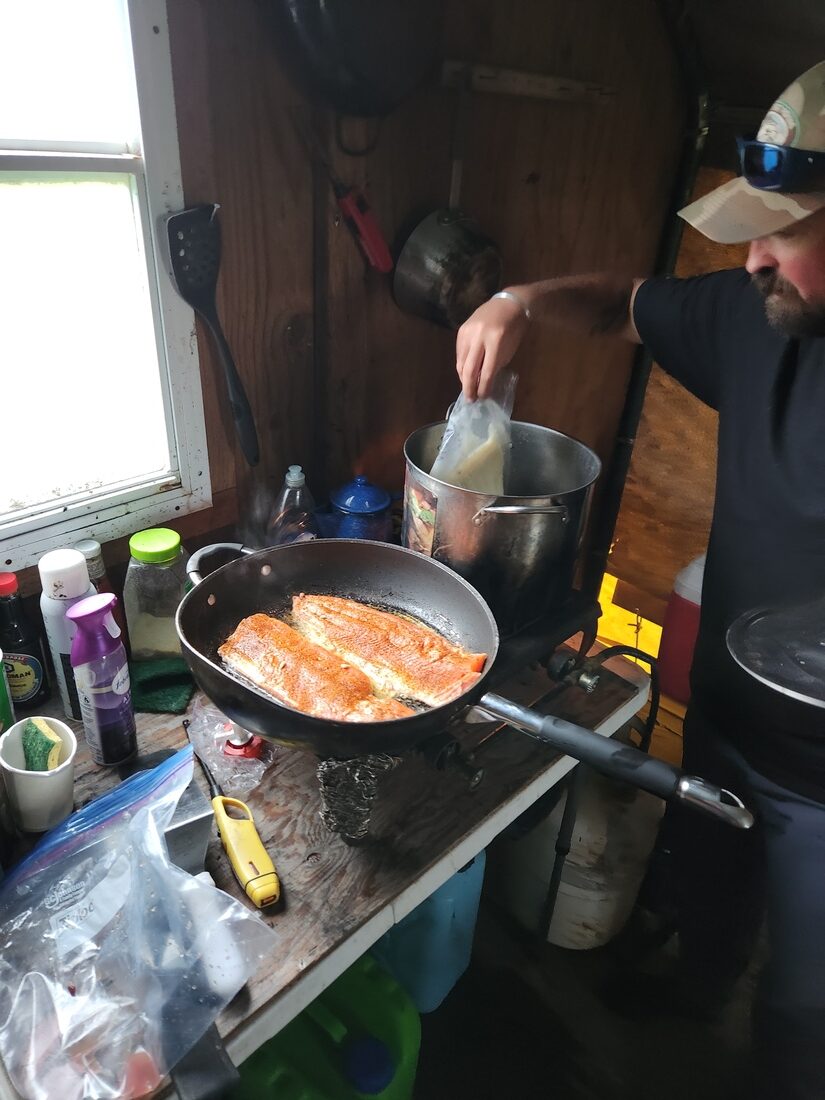
We returned home with unforgettable memories, stunning photographs, and a hefty 25-pound box of silver salmon. But nothing rivals the camaraderie we share with our FATC brothers on adventures like this. We’re already fired up to plan the next one!